









What is revenue recovery?

On this page
Every online merchant loses revenue to declined payments. Not fraud, not chargebacks, but ordinary transactions where the customer is willing to pay but the payment fails. The card gets declined, the transaction doesn't go through, and a sale you already earned quietly disappears. The global economy loses approximately $118 billion annually due to failed payments and false declines, with over 80% of customers abandoning their carts after a single rejection.
Most merchants assume these failures are just the cost of doing business. They aren't. A large share of declined transactions are recoverable and the practice of getting that money back is what we call revenue recovery.
The revenue you've already earned
Think about what a failed payment represents: for an ecommerce business, which has already spent to acquire that customer and convince them to check out, payment failure means lost revenue despite successful acquisition.
For a subscription business, a failed renewal is even worse. The customer didn't cancel, nor did they choose to leave, the payment simply didn't go through. That's involuntary churn, and it erodes LTV and NRR without anyone making a deliberate decision.
In both cases, the only thing standing between you and that revenue is a payment that failed. Recovery is about closing that gap.
Why retry logic isn't recovery
Many merchants believe they already handle this because their Payment Service Provider (PSP) retries failed payments. It's worth being clear about the difference.
Standard retries follow static schedules and run inside the same payment stack that already declined the transaction. They miss many recoverable payments because they retry based on what works in general, using the same infrastructure they used to process this transaction in the first place and that resulted in the original failure, rather than using a decline code or even payment-specific strategy in a new ecosystem.
There's also a question of focus. Recovering declined payments is a specialized problem and it isn't always where PSPs choose to commit their resources. Their priority is processing the first attempt well, not chasing the transactions that fall through after it.
A dedicated recovery provider is built specifically for that gap. Working with one typically gives your transactions access to different acquirers and new merchant accounts, so a declined payment can take a path that simply wasn't available inside your original stack.
It also means access to the full set of tools in the market that are purpose-built for decline recovery, rather than the recovery features a PSP offers as a secondary part of a much broader product.
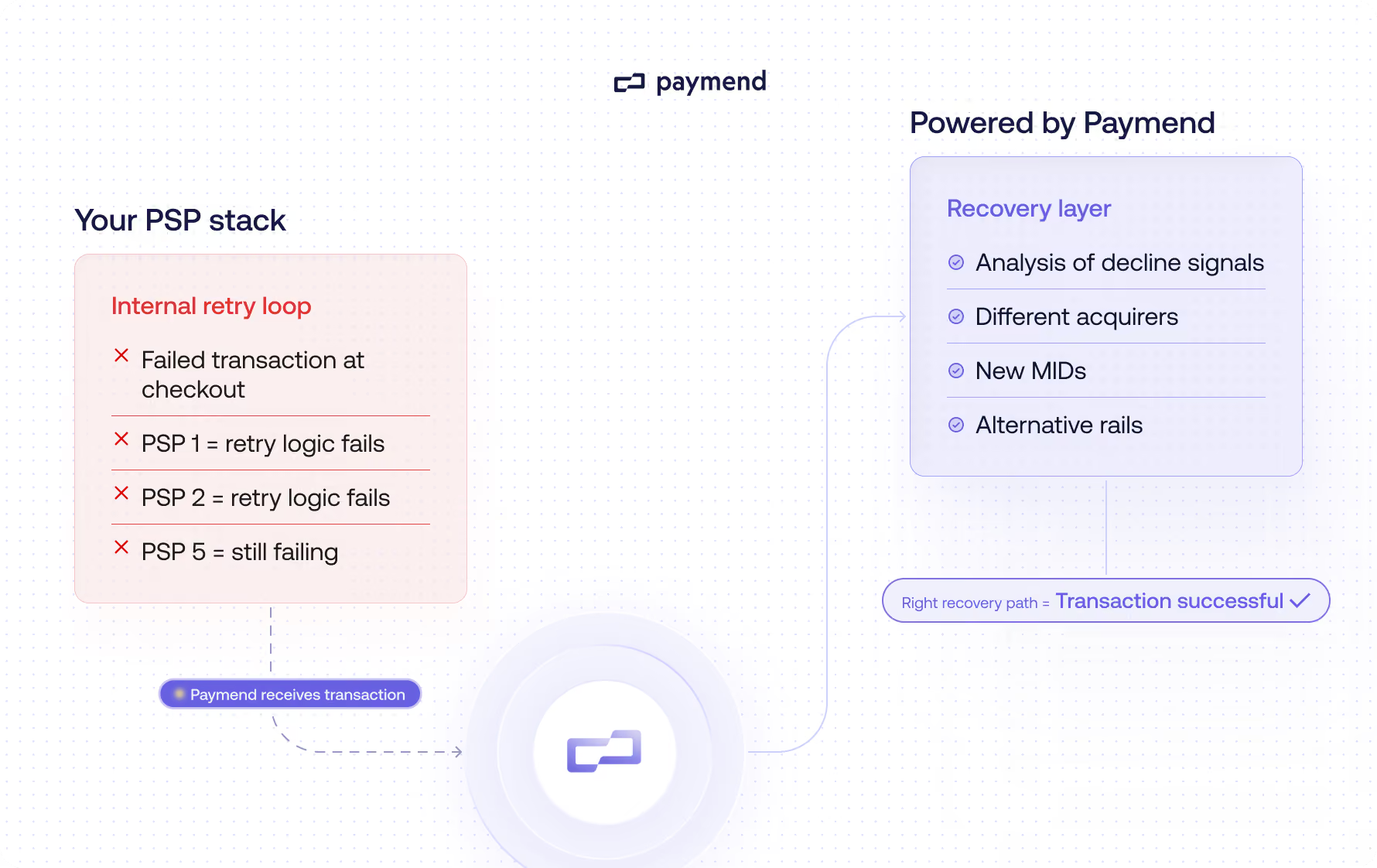
This is exactly where Paymend sits. We are an expert recovery layer you connect to your existing payment stack, dedicated to save these failed transactions, under our own infrastructure. We take complete ownership of every transaction we handle, from payment to resolution.
When a transaction fails with your primary PSP, you send us the declined transaction and we analyze every decline signal and orchestrate the right recovery approach, automatically, with no manual intervention.
How recovery actually works
A dedicated recovery layer sits at the end of the payment flow, after your existing stack has failed the transaction. When a payment declines, it gets analyzed: Why did it fail? When is the customer most likely to have funds?
It's then routed through processing infrastructure separate from your primary PSP, giving the transaction a new path to recovery.
This matters because a recovery layer external to your PSP can reach declines that PSP-native tools structurally cannot. It runs alongside your existing setup rather than replacing it, so there's no disruption to your checkout or billing engine.
Recover failed card payments
Revenue recovery isn't about eliminating declines, as some declines won't disappear. It's about making sure you capture everything that's genuinely recoverable. Recovering revenue from failed card payments you already earned, without changing how you run payments today.
For most merchants, it’s a meaningful amount of money currently being left behind.
Paymend is committed to helping businesses make informed decisions about payments and revenue recovery. We strive to provide accurate, practical, and transparent content that meets the high standards we apply across our business.



.svg)