










15 Payment orchestration platforms [by category]

On this page
Problems with online payments usually show up as slow and steady declines. Most payments teams are trying to stop revenue leakage caused by factors like issuer declines. That’s why orchestration is now a core infrastructure decision.
97% of global retailers already work with multiple acquirers, and 62% of merchants prefer multiple payment providers to run resilient, high-performing stacks. This guide breaks down the top payment orchestration platforms by category.
We’ll also explain where a downstream recovery layer fits alongside payment orchestration platforms, so eligible declined card transactions don’t get neglected.
What are payment orchestration platforms?
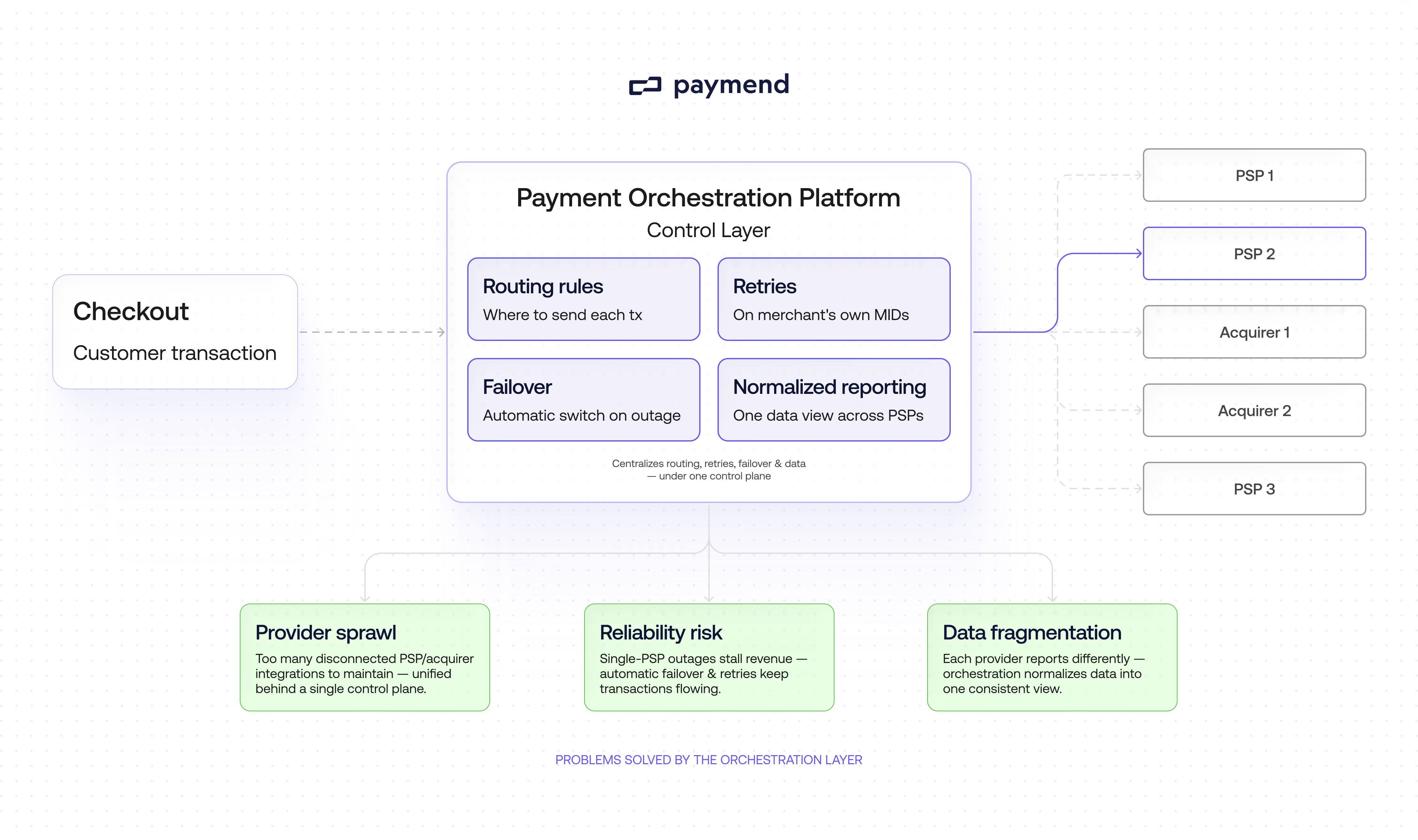
Payment orchestration platforms are a control layer that routes and manages card payments across multiple PSPs or acquirers. They enable intelligent payment routing and failover from a single place.
Instead of hard-coding one provider into your stack, orchestration lets you make routing decisions (and change them) in one place. So, your payments system stays resilient as you add components like providers and redundancy.
In operational terms, payment orchestration often centralizes:
- Routing rules (e.g., by country)
- Provider failover when a PSP or acquirer has an incident or degraded auth rates
- Retries on your own merchant accounts (with guardrails you define)
- Token or vault strategy to reduce lock-in and enable provider switching
- Centralized reporting across providers
This software is for merchants who already have (or are moving toward) provider sprawl and need a way to manage reliability risk and fragmented payment data without rebuilding their checkout every time. Aka, they have multiple PSPs or regions.
It’s important to note that payment orchestration platforms are not a PSP or acquirer replacement. An orchestration platform doesn’t own outcomes the way a full-liability recovery model does. Rather, these solutions are about governance and routing, not downstream revenue recovery.
Basically, if you’re processing in one region on a single provider with minimal routing complexity, you may not need orchestration yet.
Why merchants need both orchestration and recovery
Orchestration and recovery solve different parts of the same problem, which is why merchants often need both. For example, orchestration improves baseline payment performance at checkout by handling failover during incidents and applying retries on your merchant accounts. In parallel, digital brand protection helps limit impersonation attacks that can spike fraud and harm your account health.
But even best-effort routing still leaves a stubborn bucket of issuer declines that you can’t always convert safely on your own MID. A downstream recovery layer picks up after orchestration runs out of options, converting eligible declined card transactions into settled revenue without adding checkout friction or pushing incremental fraud risk back onto you.
Comparison table: Best payment orchestration platforms compared
How we compared these tools
We compared these platforms using the same criteria so you can shortlist the right fit quickly. Our evaluation is based on publicly available information as of April 16, 2026. We looked at things like:
- Vendor docs, feature pages, implementation guides, and product FAQs
- Integration coverage
- Packaging and pricing pages
- Security and compliance materials, where relevant
- Release notes and changelogs, where relevant
- Third-party reviews and ratings
We first separated the market by primary use case, because not every payment orchestration platform solves the same problem. We also kept the focus on commercial outcomes because even strong levers like pricing intelligence don’t help in e-commerce if high-intent orders fail at authorization.
Within each category, we looked at the capabilities and strengths that matter most for that use case:
Revenue recovery platforms
These tools focus on recovering revenue from failed or declined transactions that standard orchestration cannot convert. Key features often include declined-payment recovery and retry logic outside the merchant’s own stack. The main benefit is straightforward: they help merchants turn more failed (but legitimate) transactions into settled revenue.
Enterprise payment orchestration platforms
These platforms act as a control layer for merchants managing multiple PSPs or acquirers. Common features include smart routing and unified integrations across providers, with benefits focused on flexibility and control.
Global payment orchestration platforms for international expansion
Built for merchants selling across regions and payment ecosystems. These tools offer support for local payment methods and multi-currency coverage. Merchants might choose these so they can manage both payment performance and operational complexity in one place.
White-label payment orchestration platforms
Aimed at businesses that want to offer payments under their own brand. You’ll notice features like branded gateway experiences. The primary benefit is speed to market for launching a payment product without building the full infrastructure from scratch.
Open-source payment orchestration platforms
These tools give teams a modular orchestration stack with more control over how it is deployed and extended. They offer features like open-source licensing, providing greater flexibility and ownership for teams with the engineering resources to manage it.
15 Top payment orchestration platforms by category
Category 1: Revenue recovery platforms
1. Paymend
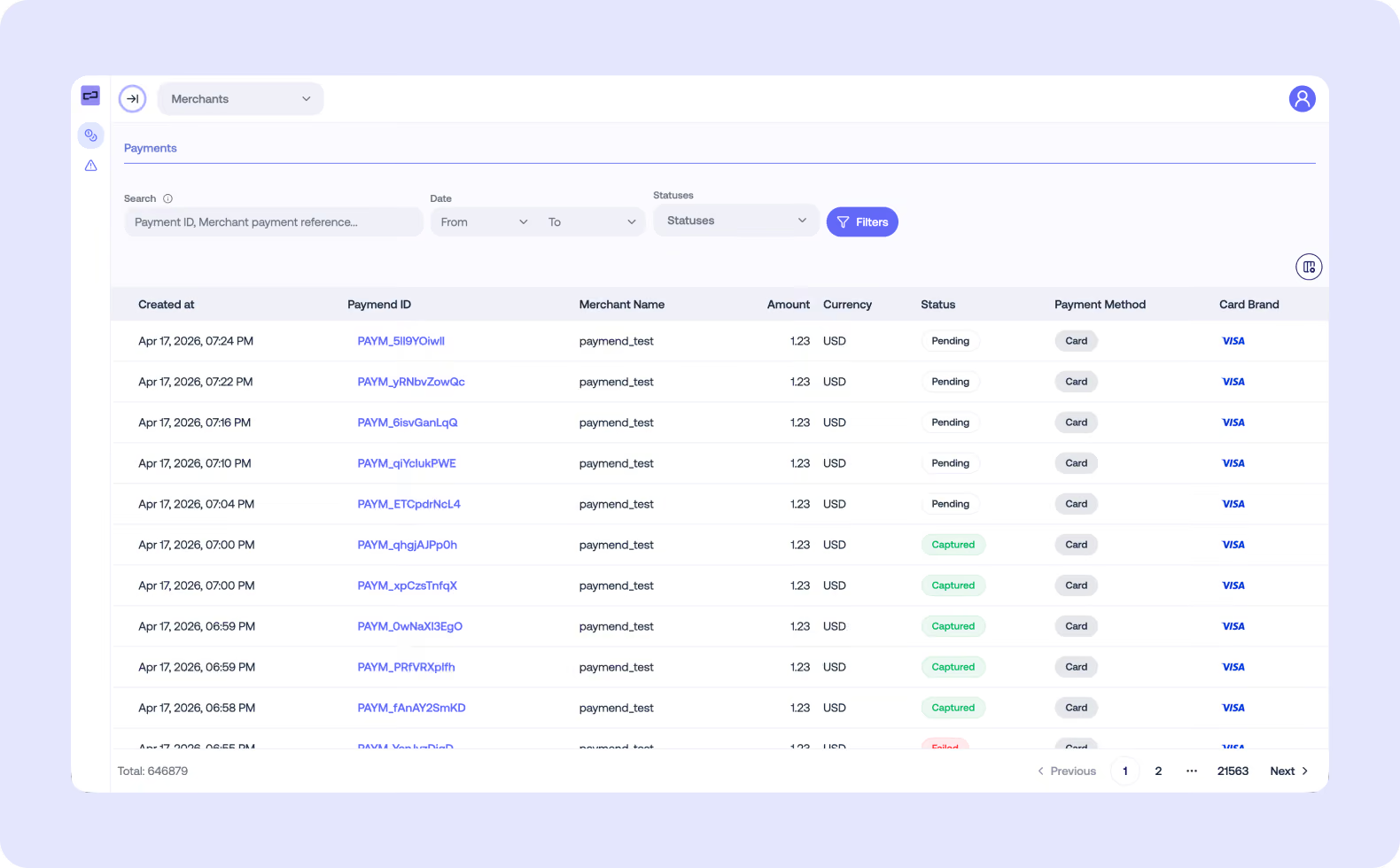
Paymend is a revenue recovery platform that converts declined card transactions into settled revenue. It does this by taking ownership of eligible declines, retrying them on Paymend’s own infrastructure, and assuming full fraud liability.
Merchants need Paymend’s failed payment recovery solution after orchestration has done its job. Orchestration helps you route, fail over, and retry on your merchant accounts.
But you’ll still be left with a stubborn bucket of issuer declines, which are often legitimate customer transactions blocked by risk models and limited CNP context. Paymend is the downstream lever for those eligible declined card transactions, converting them into settled revenue without changing checkout UX.
Main features
- Full-liability model: Paymend assumes fraud liability for the transactions it processes.
- Runs on Paymend’s own infrastructure, not smart retries on your MID
- Approval-rate recovery engine: focused on recoverable issuer declines and false declines (the stuff routing can’t reliably solve alone).
- No checkout disruption: operates behind the scenes, so there are no new re-auth flows.
- Merchant control and veto logic: you choose what to send, and Paymend can reject high-risk traffic.
- No-win, no-fee pricing: Paymend only earns on successfully recovered revenue.
Best for: Merchants losing meaningful revenue to false declines that orchestration can’t safely convert.
Price: By inquiry. No-win, no-fee (Paymend only charges on recovered revenue).
Category 2: Enterprise payment orchestration platforms
These platforms are built for merchants running multi-PSP or multi-acquirer stacks who need a control plane on their own merchant accounts, without rebuilding integrations every time.
2. Spreedly
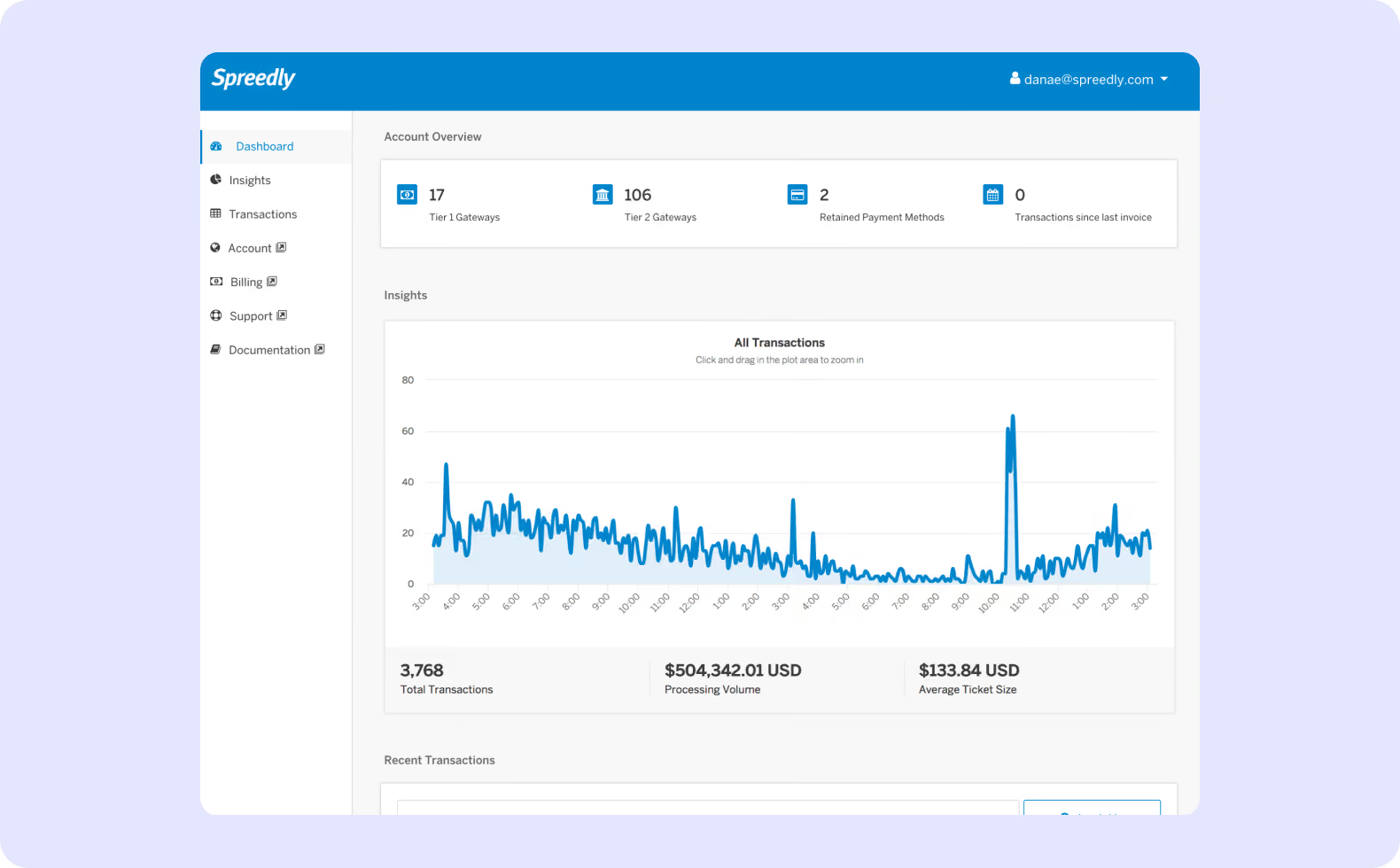
Spreedly is an orchestration layer designed to help you connect to many payment services through a single integration, with a strong emphasis on gateway-agnostic routing and vaulting and tokenization.
Main features
- Single integration to orchestrate payments across payment gateways, processors, and regions.
- Large integration ecosystem (Spreedly positions 140+ payment integrations and 40+ payment methods).
- Vault and tokenization capabilities to transact across multiple endpoints without storing raw card data in your environment.
Best for: Teams that want a gateway-agnostic orchestration and vault layer.
Price: Subscription and tiered pricing that varies by volume and packaging.
3. Primer
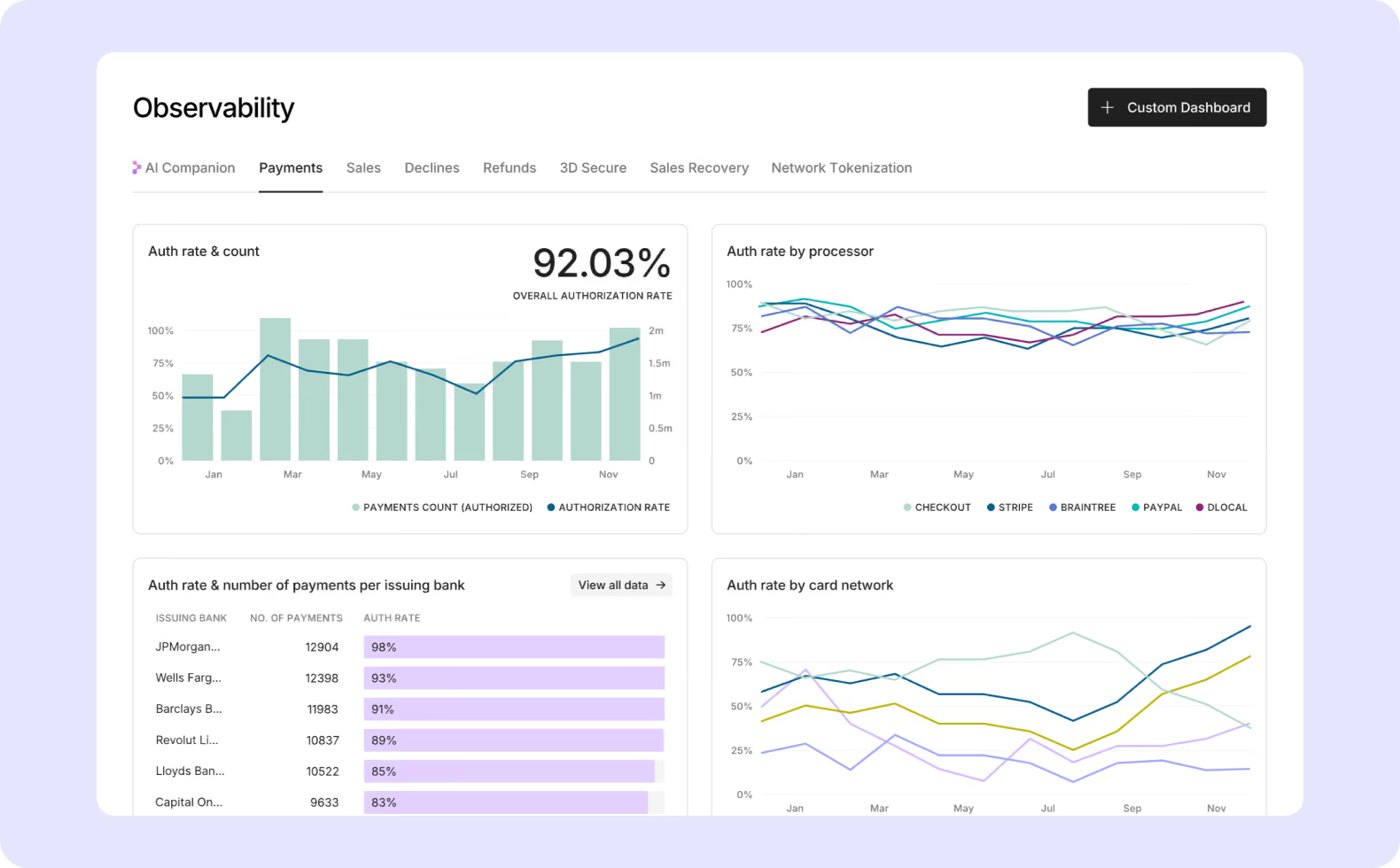
Primer positions itself as unified payment infrastructure with orchestration workflows and a configurable checkout layer. In practice, it’s built around connecting processors and routing transactions based on conditions you define.
Main features
- Workflows and routing logic to route transactions across connected processors based on rules or conditions.
- Universal Checkout to unify payment methods and processors behind one integration (web and mobile) in a PCI-compliant way.
- Unified visibility into payment performance and provider-level metrics.
Best for: Those who value a more configurable ops layer that can be managed without constantly shipping code changes.
Price: By inquiry.
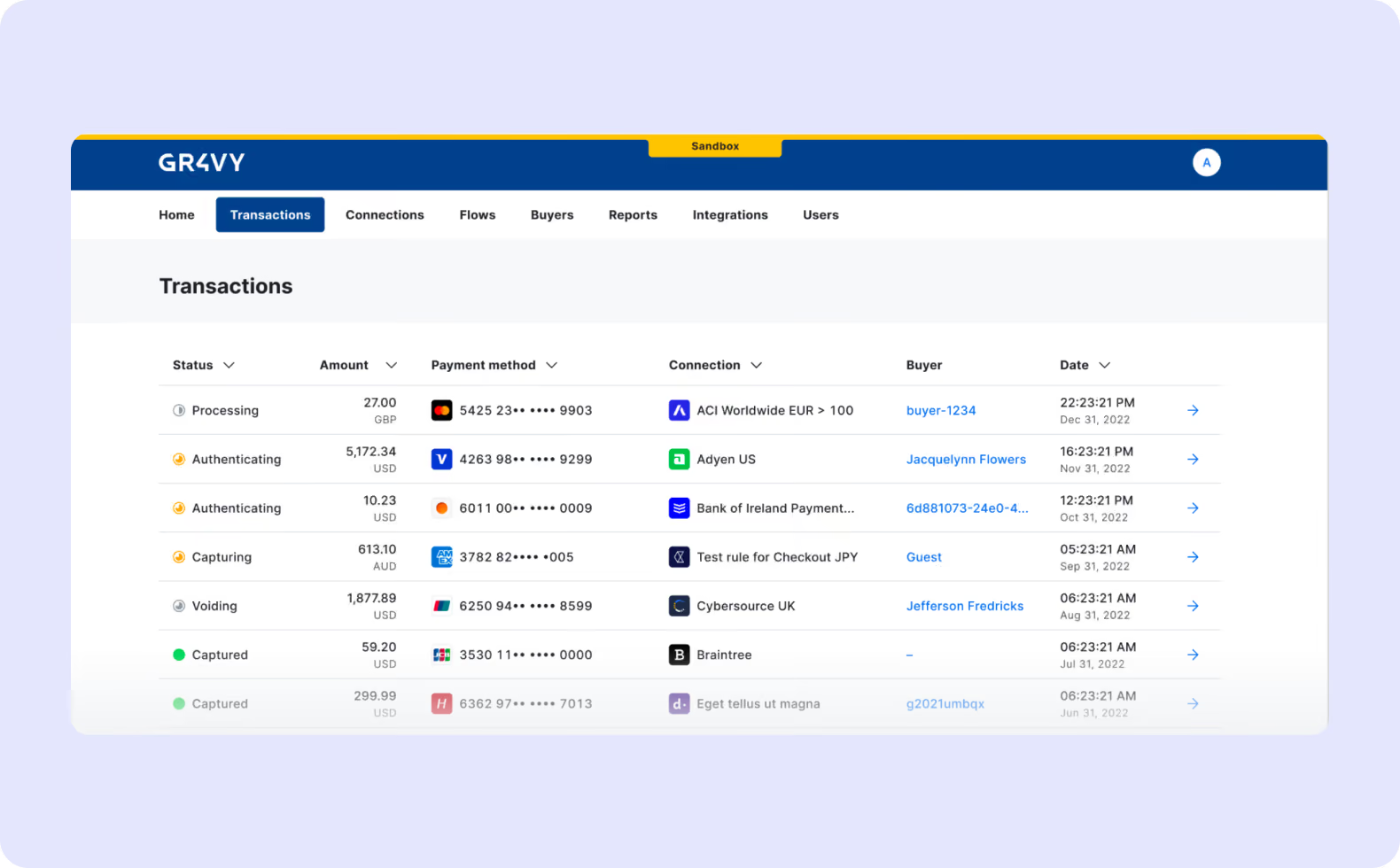
4. Gr4vy
Gr4vy is a payment orchestration platform focused on giving merchants a single integration layer for connecting PSPs, payment methods, and related tools, with routing and optimization managed centrally.
Main features
- Universal integration to connect and manage a payment ecosystem from one layer.
- No-code control for configuring and optimizing transaction logic.
- Access to 400+ payment methods and anti-fraud providers.
Best for: Teams that want a control-plane approach with strong emphasis on centralized configuration.
Price: By inquiry.
5. IXOPAY
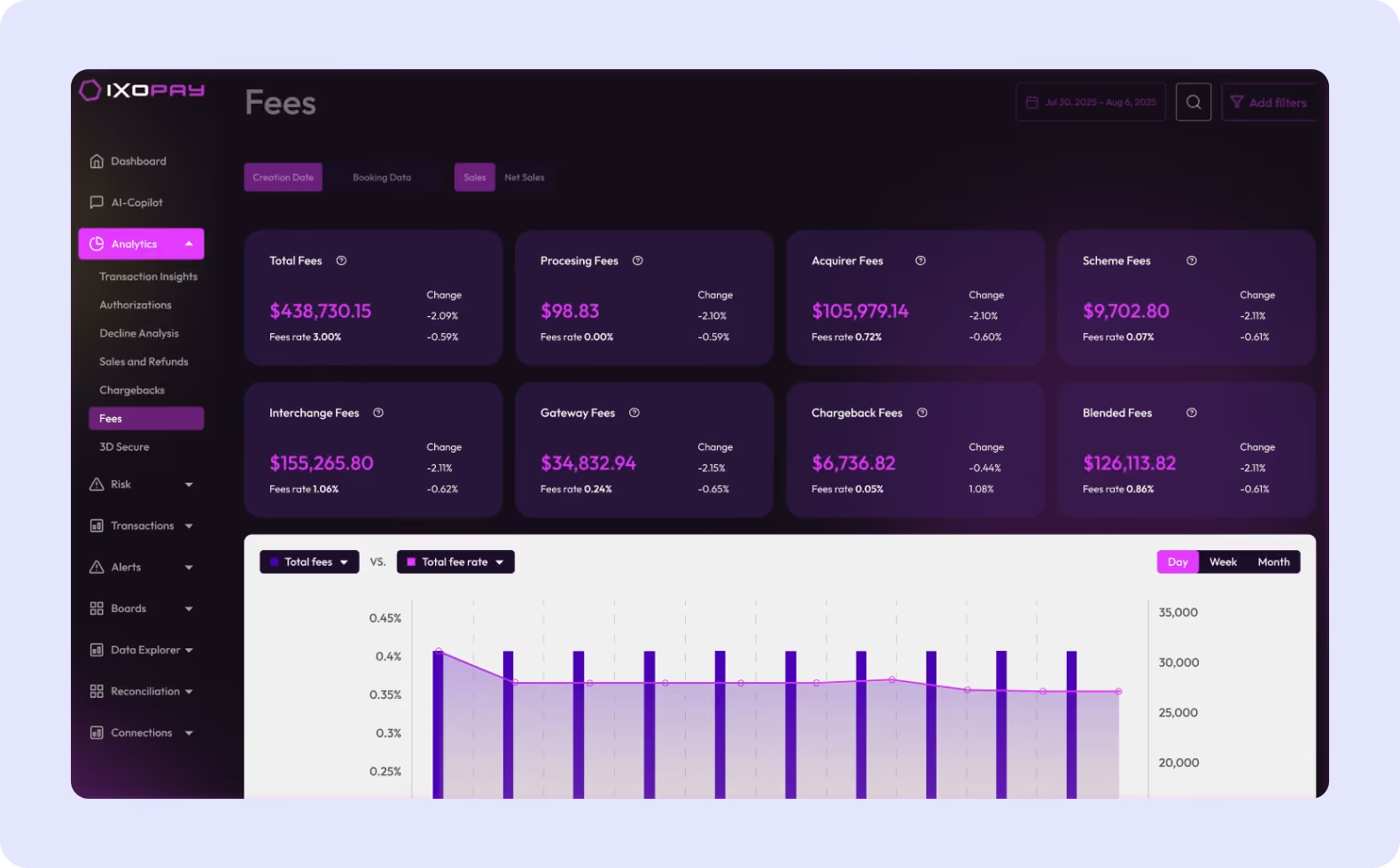
IXOPAY is positioned as an orchestration platform connecting multiple payment providers so merchants can route transactions based on transaction context and analyze performance across providers in one interface.
Main features
- Provider connectivity and unified interface for routing and managing multiple providers.
- Routing based on transaction and provider fit.
- Broader platform positioning around orchestration plus tokenization and intelligence modules.
Best for: Those who care about packaging modular capabilities beyond just routing.
Price: €199/month (Starter) and €499/month (Growth).
Category 3: Global payment orchestration platforms for international expansion
6. BR-DGE
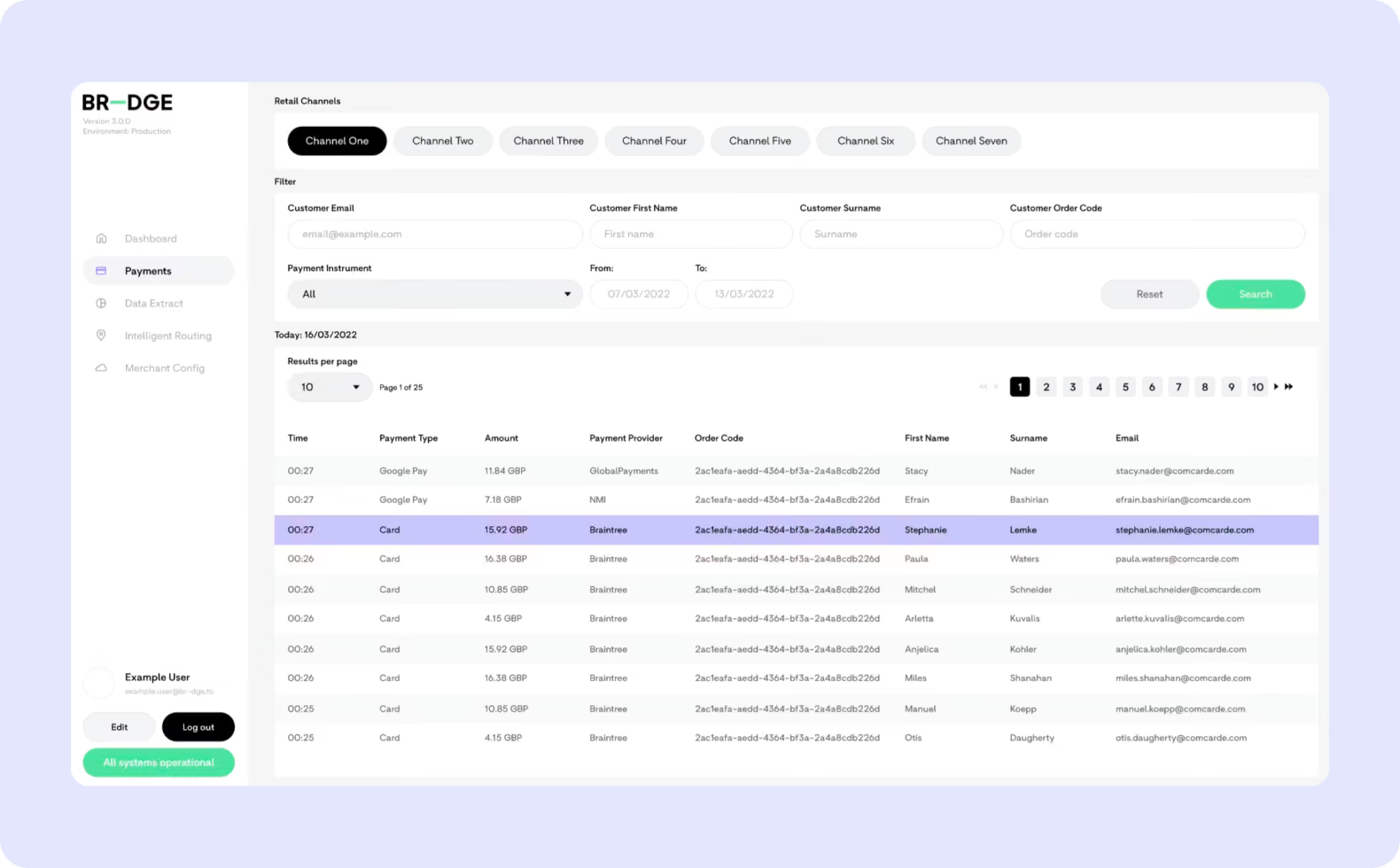
BR-DGE is an orchestration layer designed to connect merchants to a broad payments ecosystem through a unified abstraction, with an emphasis on modularity and performance management as you expand.
Main features
- Single orchestration abstraction to connect PSPs and fraud services.
- Routing engine and real-time reporting
- Network tokenisation services and 400+ connections
Best for: International merchants who prioritize connectivity breadth and tokenization as they scale.
Price: By inquiry.
7. Yuno
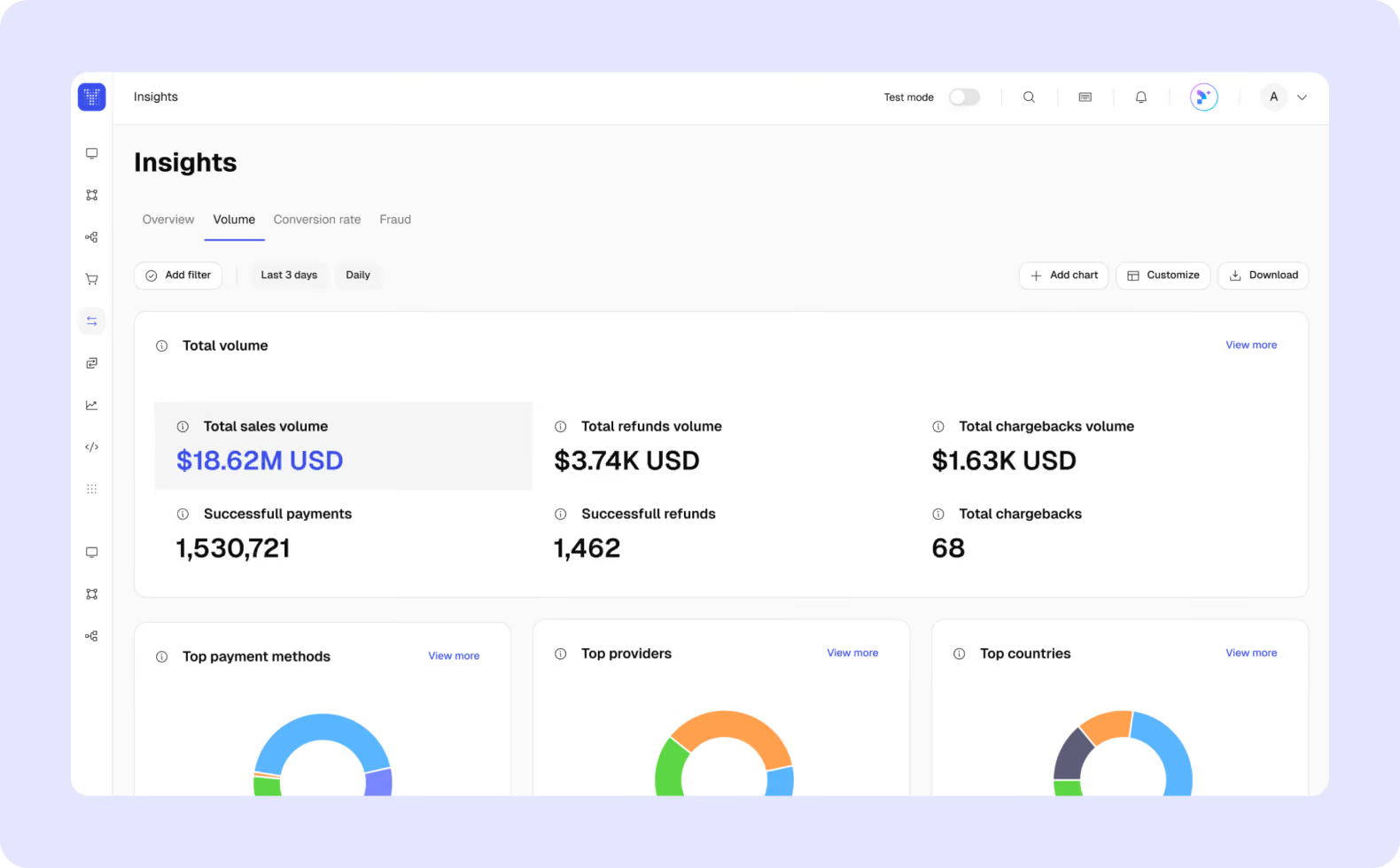
Yuno positions itself as a global orchestration platform that manages the lifecycle from routing through settlement and reconciliation, with broad coverage across payment methods and regions. Yuno is also pushing into agentic commerce with new launches like Payments Concierge, which is an AI payments agent that monitors your stack.
Main features
- Orchestration across authorization, routing, fraud prevention, settlement, and reconciliation
- Single-platform access to payment methods and fraud prevention systems
- 200+ countries supported, 180+ currencies supported.
Best for: Rapid international expansion where the main problem is coverage.
Price: By inquiry.
8. CellPoint Digital
CellPoint Digital is best known for orchestration in travel and complex commerce environments. It positions OSO (One Source Orchestration) as a travel-native platform that unifies payment flows across channels and geographies.
Main features
- Travel-native orchestration that unifies flows across channels and geographies.
- Omni-channel payments and digital commerce focus.
Best for: Travel-style payments complexity, such as multiple flows.
Price: By inquiry.
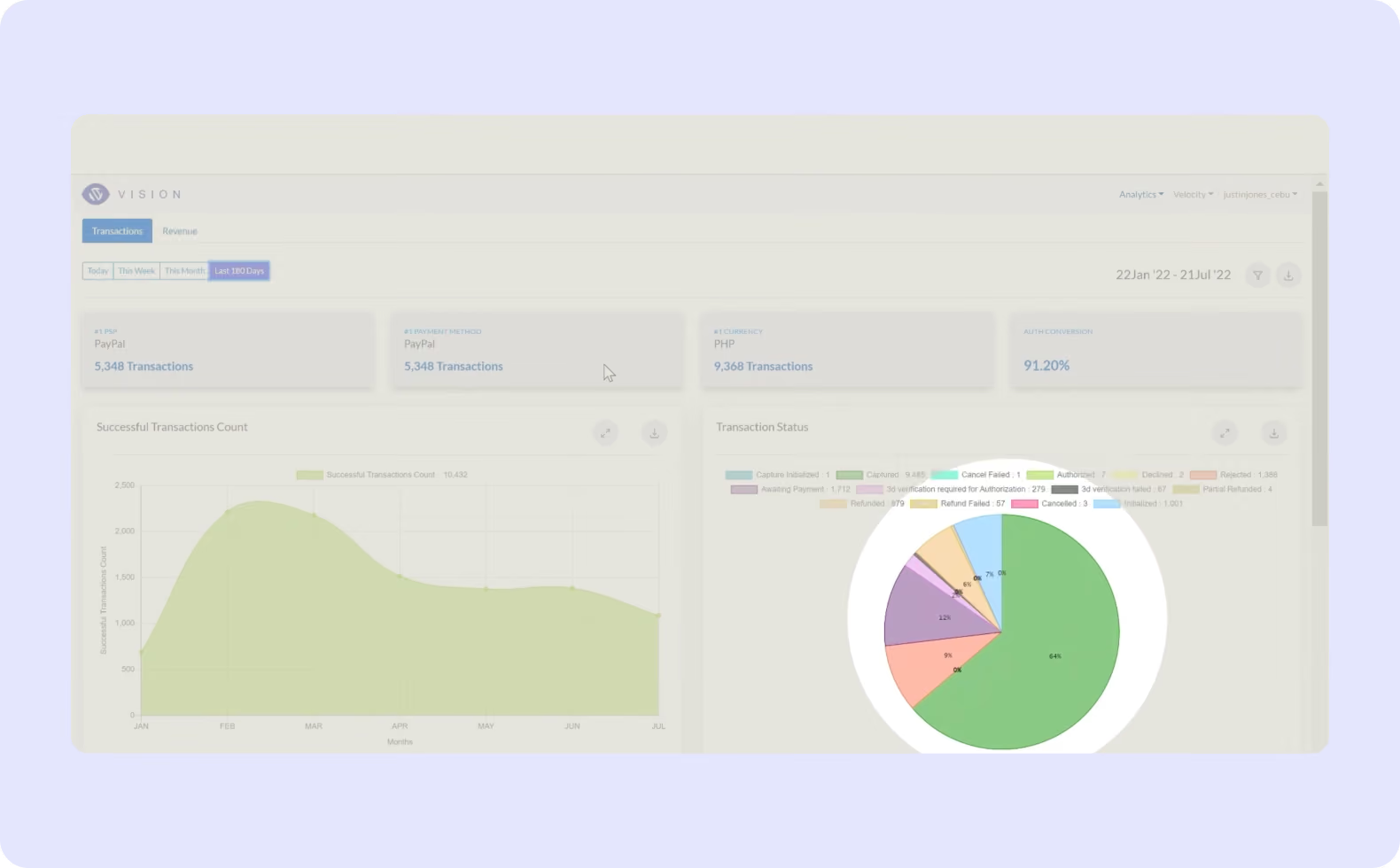
9. APEXX Global
APEXX positions itself as a global orchestration platform that consolidates providers behind a single integration, with routing and cost and acceptance optimization as key value props.
Main features
- Single API positioning to connect merchants to a global ecosystem.
- Intelligent routing and cost routing.
- Positions itself as taking the place of a gateway.
Best for: Merchants that treat orchestration as a lever for commercial optimization.
Price: By inquiry.
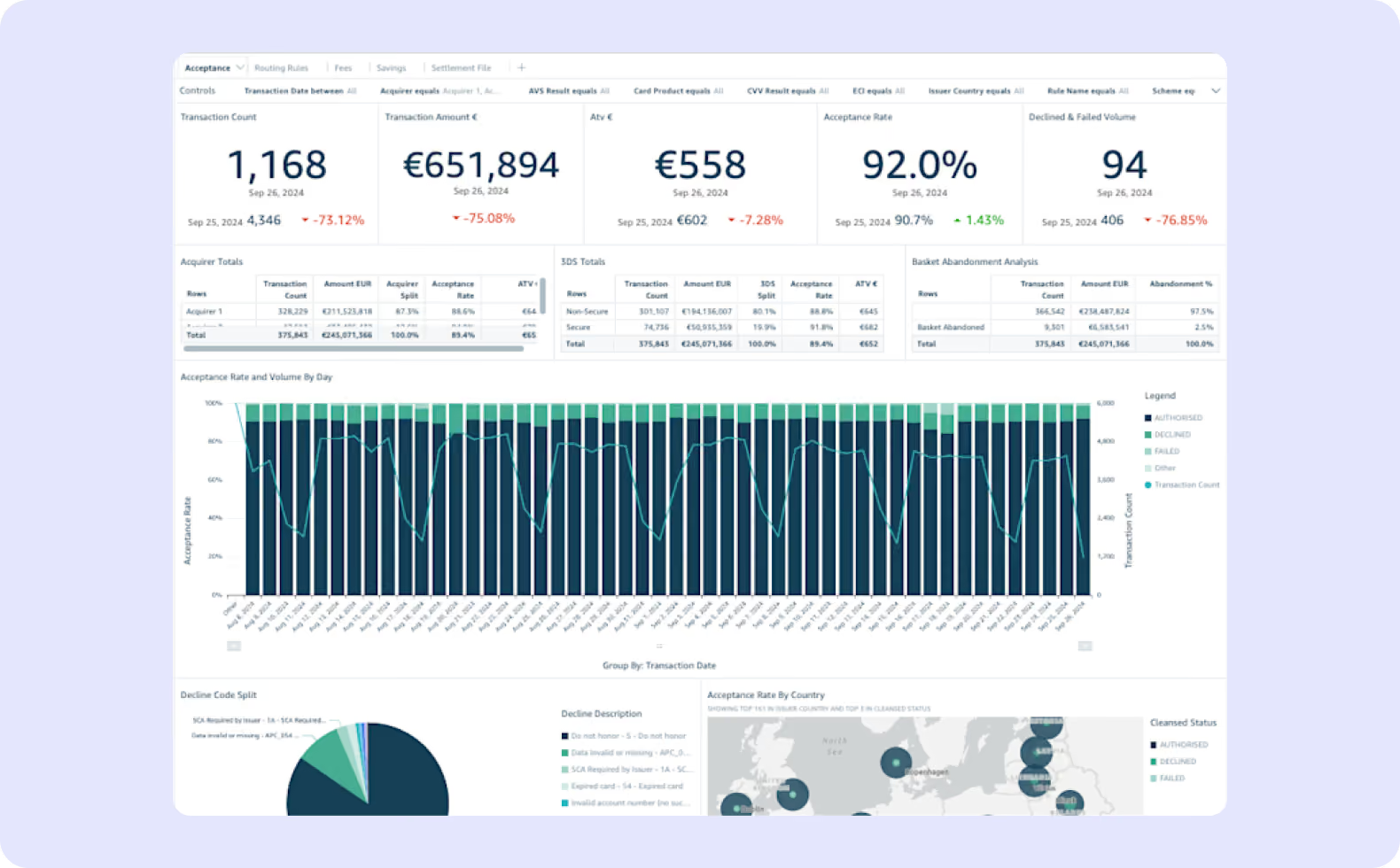
Category 4: Payment orchestration and operations platforms
10. Payrails
Payrails positions itself as a payment operating system that connects orchestration with payment ops, including routing and retries, plus workflows, vaulting, analytics, reconciliation, payouts, and more in one modular stack.
Main features
- Configure retry strategies and automatic rerouting when providers degrade.
- PSP-agnostic token vault.
- Chargeback workflows and automated reconciliation operations modules.
Best for: Enterprises that want orchestration plus payments operations in one place.
Price: By inquiry.
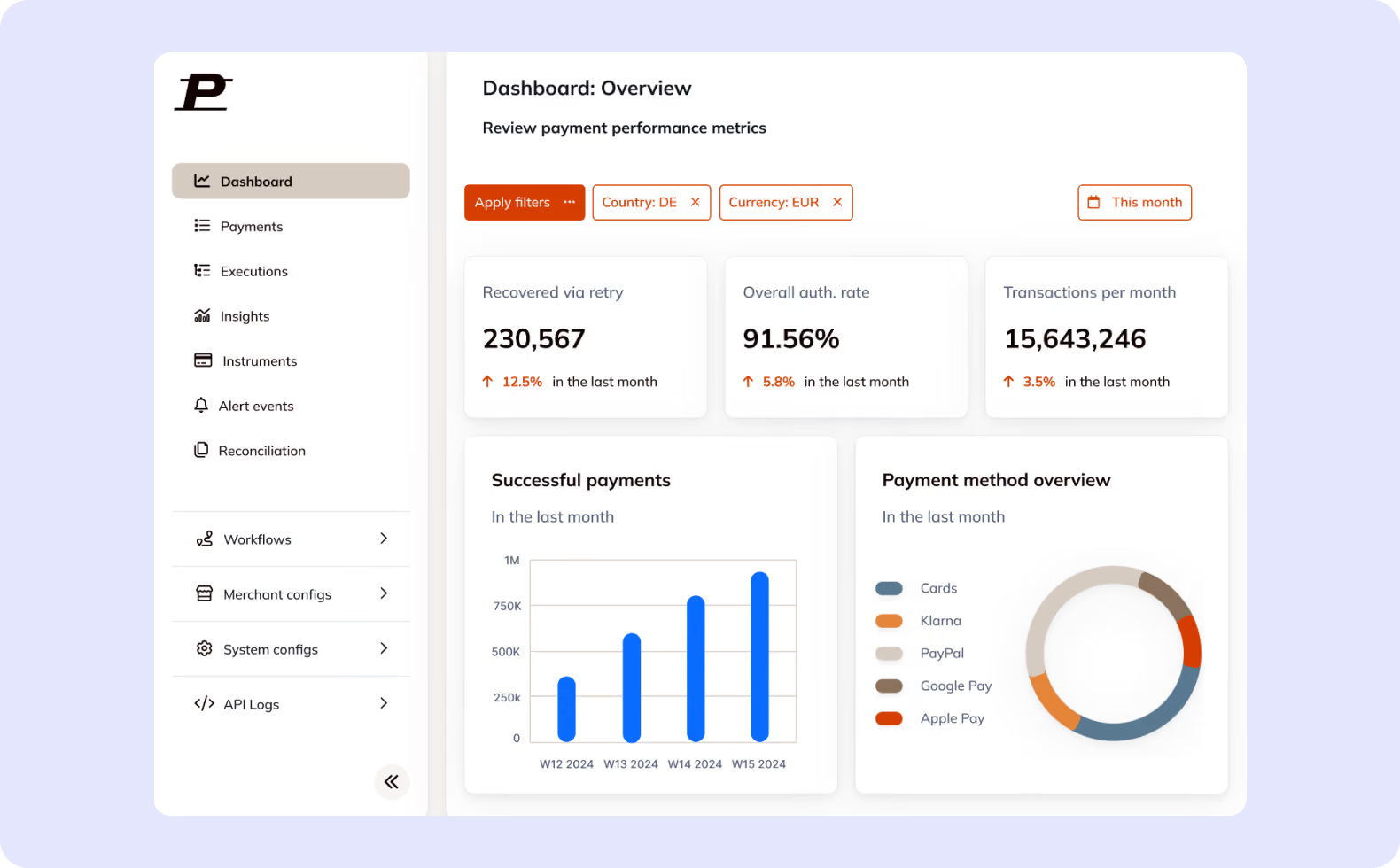
11. ProcessOut
ProcessOut is positioned around two core jobs: monitoring and analytics across providers and routing or retries across a multi-provider stack. Some teams layer automation like multi-agent AI on top of this kind of visibility to triage incidents and propose routing changes faster.
Main features
- PCI-oriented vaulting and token strategy to enable cross-provider routing.
- Ops suite for reconciliation and compliance checks.
- Provider-agnostic monitoring that analyzes transactions across providers.
Best for: Teams where the immediate bottleneck is visibility and performance monitoring across PSPs.
Price: The Basic plan is free. Advanced plans are paid.
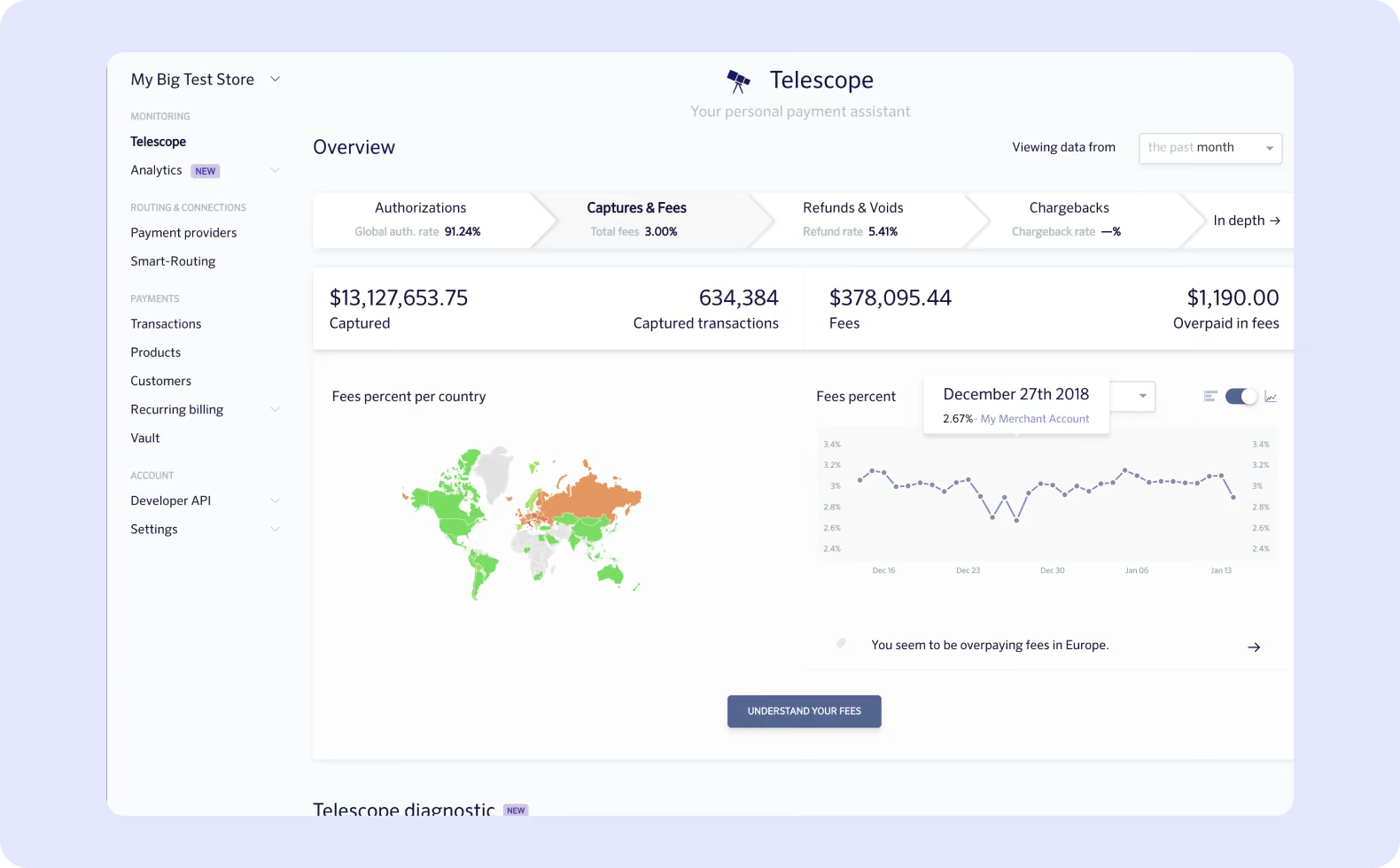
Category 5: White-label payment orchestration platforms
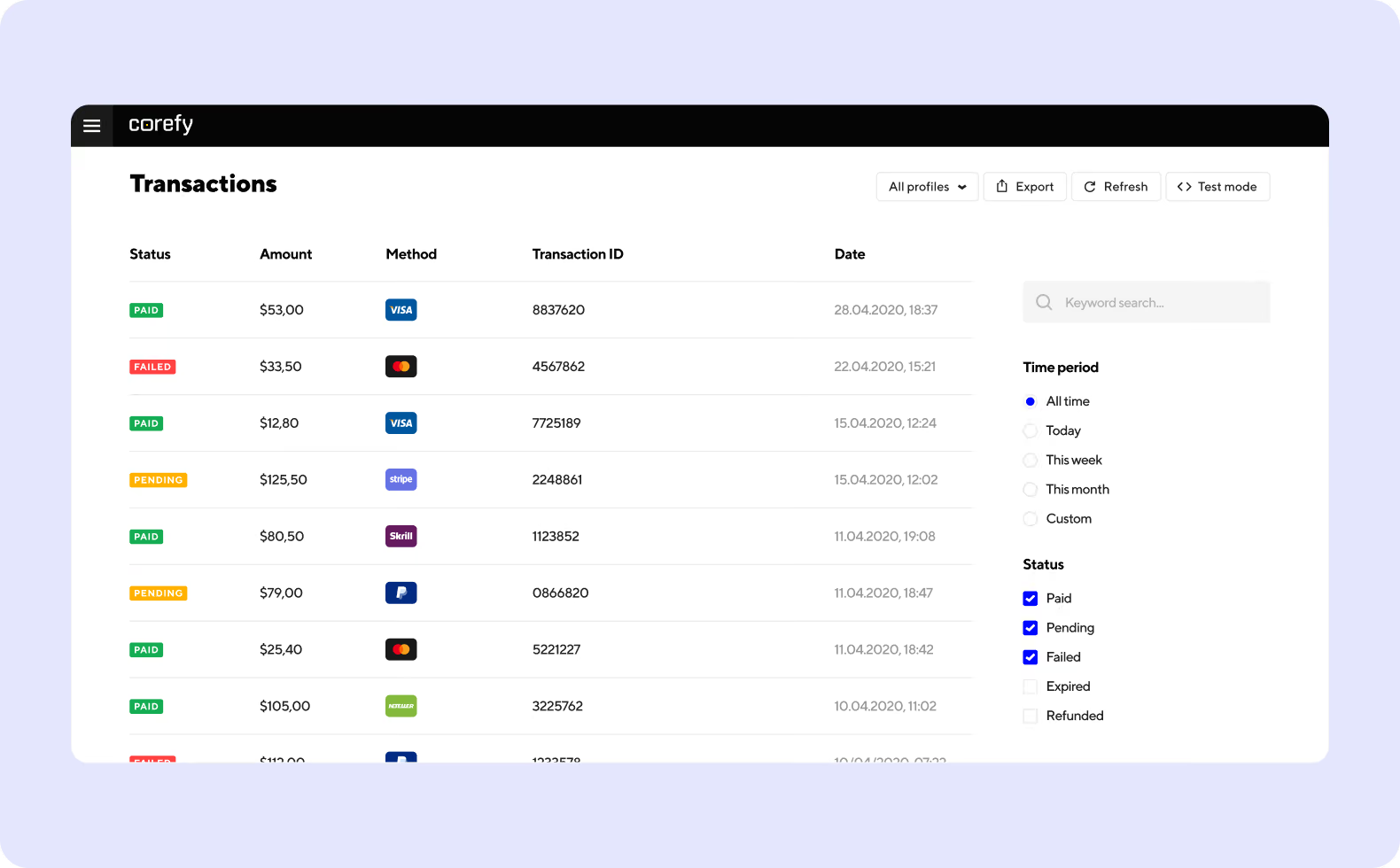
12.Corefy
Corefy is a payment orchestration and white-label infrastructure platform geared toward payment institutions and complex payment operations. It’s positioned to help you launch a branded payment gateway experience with routing and a merchant portal, without building everything from scratch.
Main features
- White-label gateway positioning with merchant portal support.
- Multi-provider routing.
- Public pricing plans with included transaction volumes.
Best for: Businesses launching a white-label payments product that need a merchant-facing portal under their own brand.
Price: Standard starts at €2,500/month and Professional at €6,000/month.
13. Akurateco
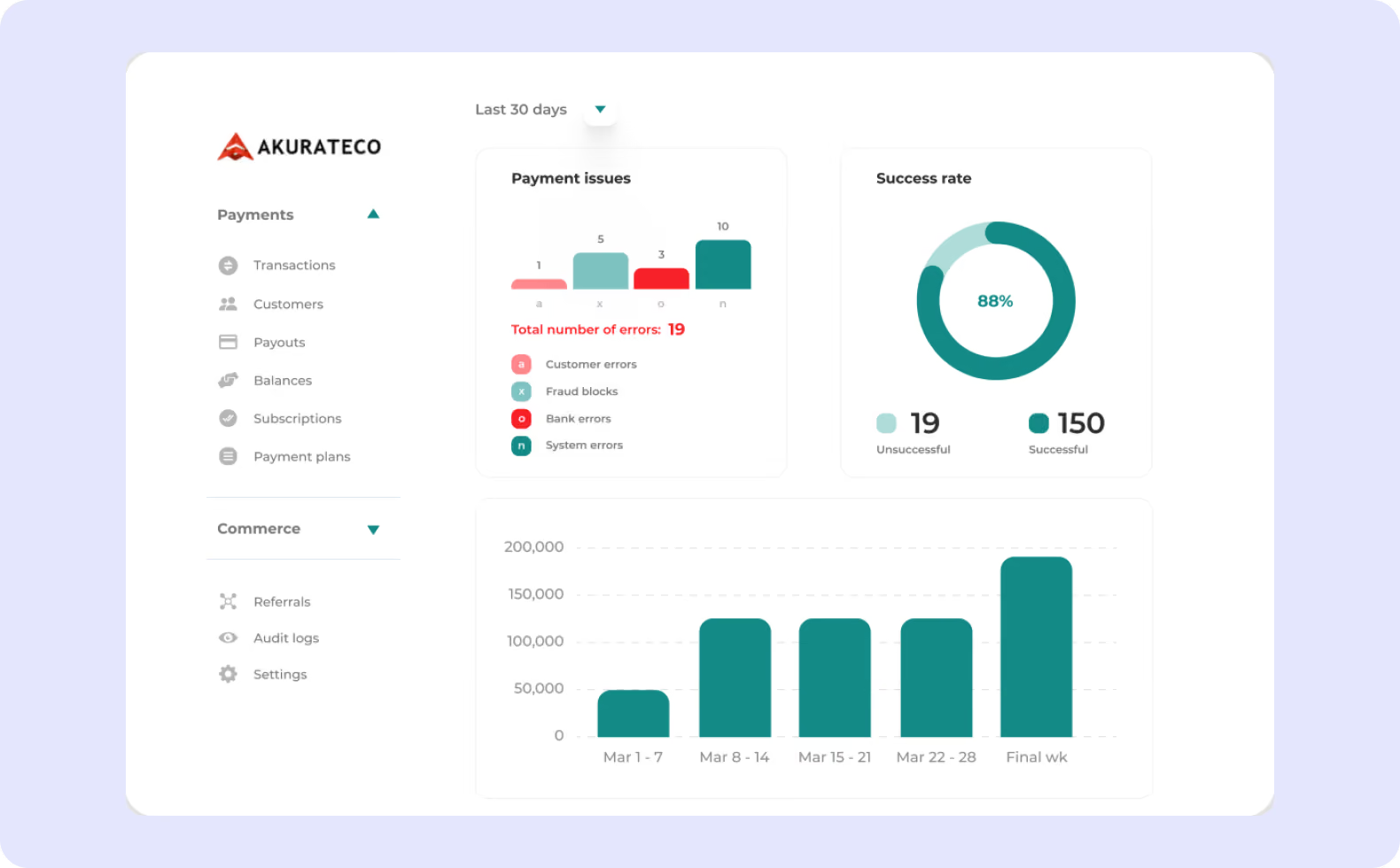
Akurateco positions itself as a global orchestration platform with routing and cascading, and it explicitly sells white-label capabilities for running payment operations under your own brand.
Main features
- Connectivity claims of 600+ providers through one integration.
- Built-in routing and cascading as core platform concepts.
- Multiple deployment options listed (SaaS, on-premise, cloud-agnostic).
Best for: White-label orchestration for payment businesses that need deployment flexibility.
Price: By inquiry.
14. Paydock
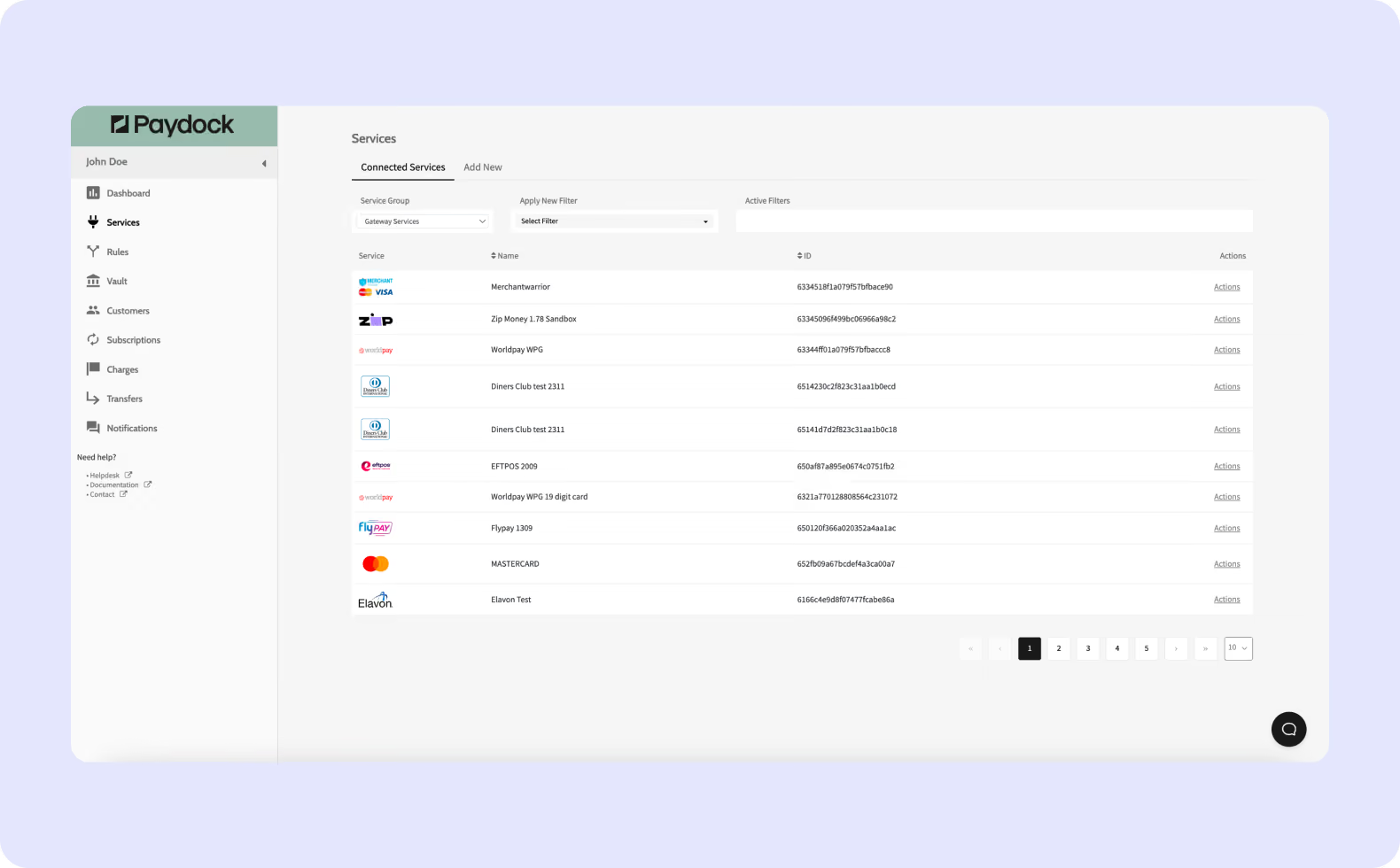
Paydock is positioned as a low-code, API-first orchestration platform that unifies payments with adjacent services like fraud and identity. It’s included here because it supports customizable branding and is aimed at both banks and merchants who want orchestration without heavy rebuilds.
Main features
- Low-code, API-first orchestration positioning.
- API and SDK-based integration options.
- Customizable branding as a supported capability.
Best for: Teams that want an orchestration layer with a low-code and API-first integration style.
Price: By inquiry.
Category 6: Open-source payment orchestration platforms
15. Hyperswitch
Hyperswitch is an open-source payments orchestration stack with a modular approach, plus an open-source “Control Center” UI for managing payment operations. It’s Apache-2.0 licensed.
Main features
- Apache-2.0 open-source license.
- Open-source Control Center with routing rules, analytics, and cross-processor management.
- Modular orchestration capabilities and multiple deployment paths.
Best for: Payments teams with strong engineering capacity that want open-source control.
Price: Open source. Cloud and hosting offered by inquiry.
The stack is only as strong as your decline recovery
The right choice of payment orchestration platform is the one that matches your stack complexity and redundancy requirements. It’s all about your team’s ability to operationalize routing, retries, and reporting across providers.
But even the best routing and failover still leaves a stubborn bucket of issuer declines you can’t safely convert on your own merchant accounts.
Paymend fits as a downstream approval-rate recovery engine for eligible declined card transactions, running declines on Paymend’s own infrastructure with full fraud liability and no checkout changes.
If you’re already orchestrating, the next question is simple: how much of your remaining declines are recoverable? Book a demo to see what Paymend can turn into settled revenue.
Paymend is committed to helping businesses make informed decisions about payments and revenue recovery. We strive to provide accurate, practical, and transparent content that meets the high standards we apply across our business.




.svg)