









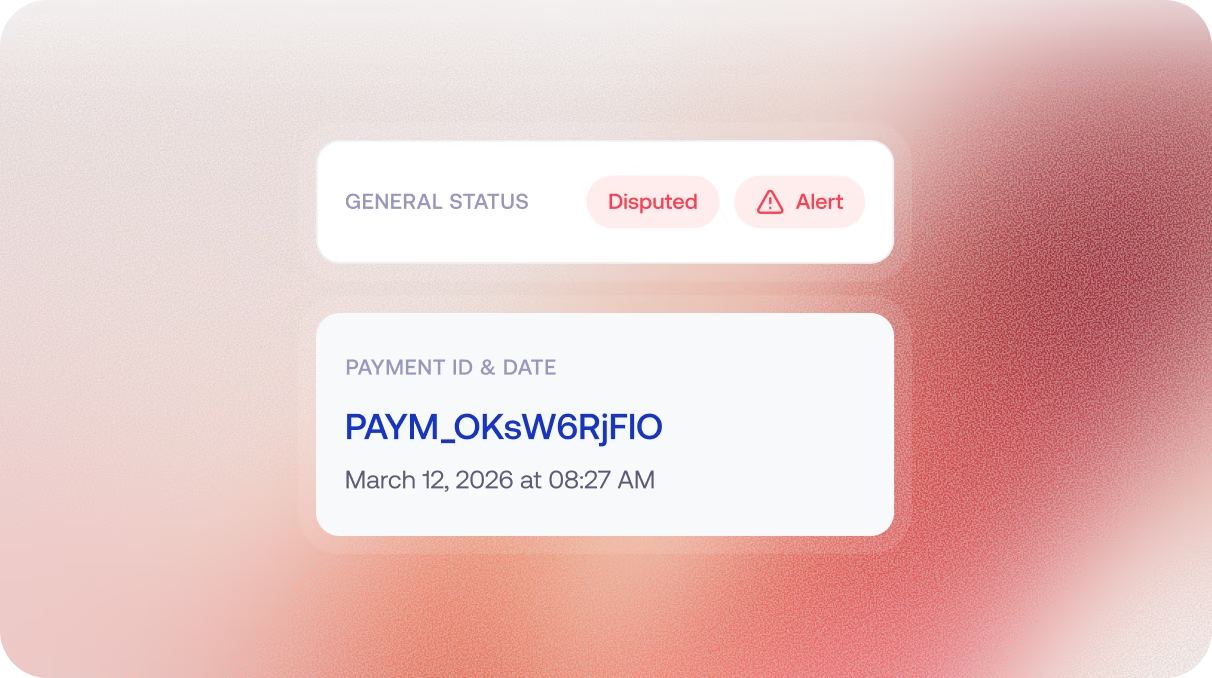
Top 10 failed payment recovery solutions

On this page
When measuring growth, few teams focus on revenue lost at authorization. For many merchants, improving authorization outcomes is one of the fastest ways to reduce cart abandonment without touching checkout UX. In practice, a big portion of online failure is issuer-declined card transactions, including false declines.
A huge $157 billion in U.S. e-commerce sales are at risk due to false declines, with $81B projected to be permanently lost despite attempts to recover. Failed payment recovery solutions exist to convert failures into collected revenue. But not all recovery is the same. Some tools focus on billing and involuntary churn after the transaction. Others improve routing and acceptance at checkout.
Only the best solutions are designed to recover declines without introducing checkout friction or adding risk exposure to your merchant accounts, as we will explore. The right tool depends on whether you’re fixing churn after a failed renewal or recovering declines at authorization.
What are failed payment recovery solutions?
Failed payment recovery solutions are tools and platforms designed to turn unsuccessful payment attempts into successfully authorized and ultimately settled revenue. That success directly improves conversion from existing demand and helps control customer acquisition costs (CAC).
In practice, that usually means issuer-declined card transactions (often false declines), as well as occasional transient processor and network errors. Then, these tools apply a set of actions, such as retries and routing, to get the charge approved and funds captured.
The important thing to note is that recovery doesn’t just mean trying to recover the revenue. It means moving a transaction from decline to successful authorization and settlement, therefore protecting conversion without creating additional risk exposure.
Types of failed payment recovery solutions
Most revenue recovery solutions have features that overlap across categories. Some tools prevent failures; others recover after declines. The real difference is where the solution operates in the payment lifecycle:
- Checkout authorization: Real-time acceptance during authorization.
- Post-transaction billing: Renewals and invoice collection.
- Infrastructure and routing: How transactions are processed and presented to issuers.
Subscription and SaaS revenue recovery
These tools focus on post-transaction billing failures (e.g., renewal declines, involuntary churn). They use retry schedules and payment method management to bring accounts back to paid.
Card account updater and network tokenization tooling
These tools prevent avoidable failures caused by stale credentials, such as expired cards. They refresh credentials and can improve baseline authorization performance in some issuer scenarios, but they’re not designed to recover issuer declines after the fact.
Payment orchestration and smart routing
These platforms improve authorization performance by routing transactions across acquirers and processors and standardizing handling. They’re primarily used to improve first-attempt acceptance, and may also support structured retries inside your stack.
Fraud tooling
Fraud platforms reduce fraud losses and issuer-driven declines in risk by improving risk decisions and reducing false positives. They can lift approval rates, but they’re not purpose-built to recover revenue from declines after a payment attempt fails.
Benefits of failed payment recovery solutions
- Recover revenue that was already won: Recovery tools turn failed attempts into settled transactions, increasing top-line without new acquisition spend.
- Improve conversion without changing the buyer journey: You protect checkout conversion and reduce cart abandonment without introducing new steps or friction.
- Reduce revenue leakage as volume scales: Recovery solutions help keep approval performance from becoming an invisible ceiling on growth.
- Protect merchant account health and risk exposure: The right solution improves performance while keeping fraud and operational risk under control.
- Reduce operational burden: A recovery layer can standardize handling and outcomes, making revenue more predictable and easier to forecast.
Key features to look for in failed payment recovery solutions
- Decline diagnosis and reason-code intelligence: Recovery starts with knowing why a transactiont failed and what action is likely to work next. Hence, look for tools that normalize issuer signals and map them to clear, testable recovery actions.
- Approval-rate recovery logic: The best solutions apply next-best action logic to adjust transaction presentation and execution strategy based on what issuers tend to approve.
- Routing and execution controls: If the solution touches routing, you want control over which transactions qualify and how retries are sequenced.
- Risk management that doesn’t worsen your exposure: Prioritize solutions with clear controls to avoid risk associated with increased fraud attempts and chargebacks.
- Fast integration with minimal disruption: You need visibility into recovered revenue, approval-rate lift by segment and failure reasons, so recovered revenue and decline outcomes flow into your e-commerce data.
10 top failed payment recovery solutions
1. Adyen Uplift
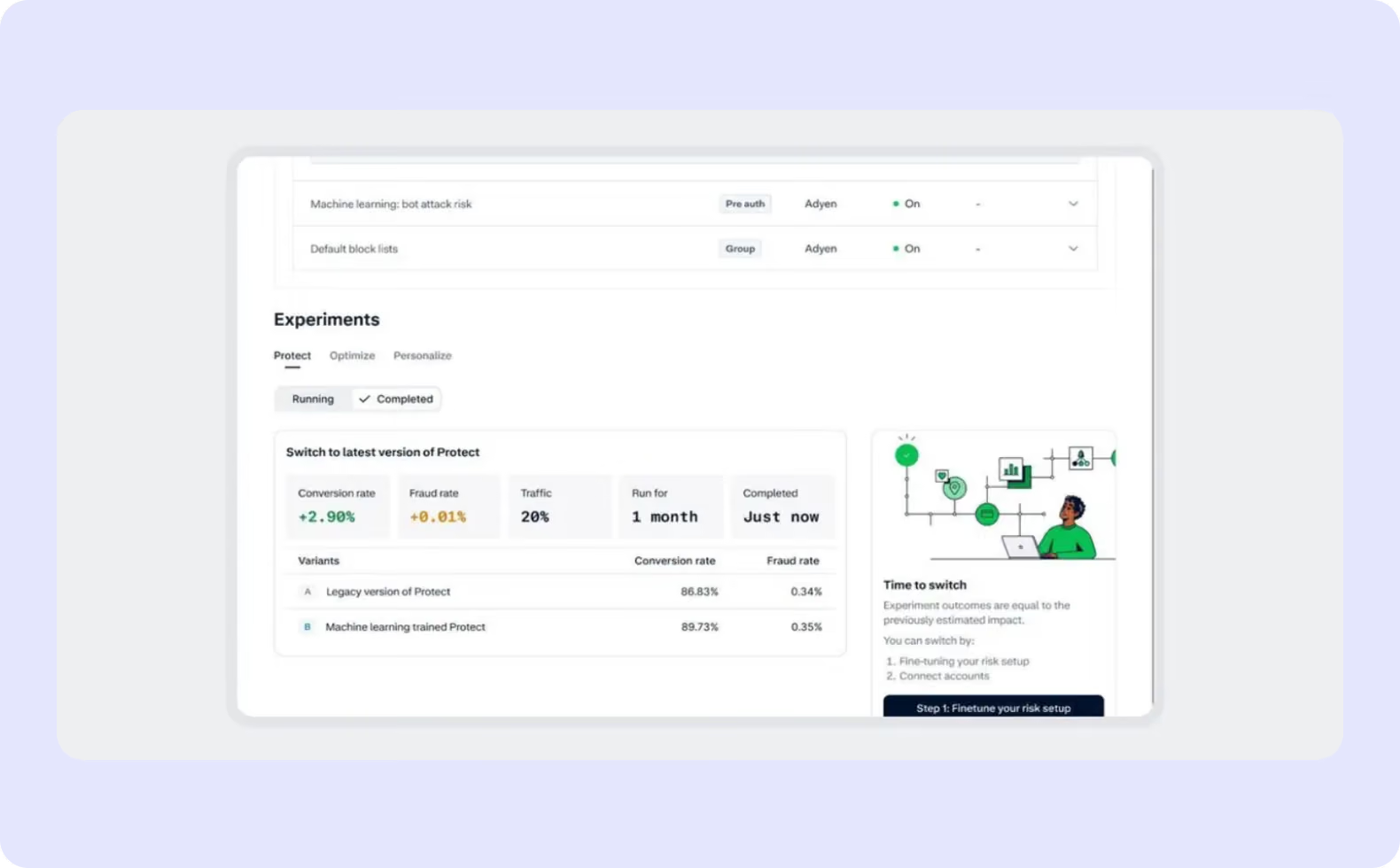
Adyen is a full-stack payments platform with built-in optimization features. It’s designed to help merchants reduce card-on-file and recurring payment failures. For recovery specifically, Adyen helps you attempt recovery within your own processing setup.
Main features:
- Automated retry tooling for eligible refused shopper-not-present card transactions.
- Account updater capabilities to check for updated card details when a payment is refused.
- Combines rules-based optimization with AI tools to improve acceptance across segments.
Pricing: By inquiry.
Best for: Merchants already processing meaningful volume who want native acceptance and recovery tooling.
2. Paymend
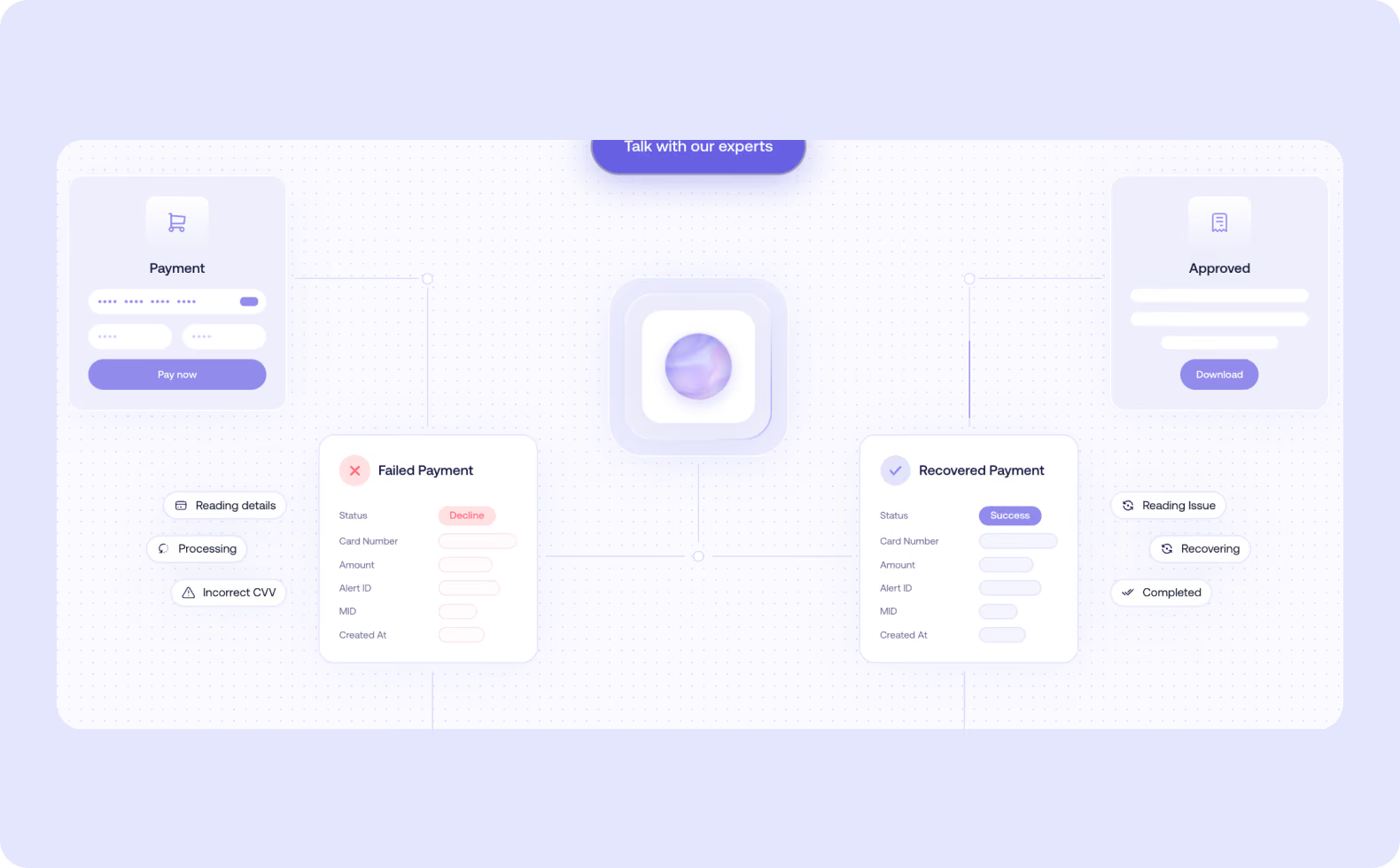
Paymend is a revenue recovery platform built to convert declined card transactions into settled revenue. It works without changing your checkout flow or pushing extra risk onto your payment stack. As a result, Paymend is a practical lever for e-commerce conversion optimization when issuer declines are your bottleneck.
Instead of retrying on your merchant accounts, Paymend takes ownership of the declined transaction and runs recovery on Paymend’s own banking infrastructure. With Paymend, merchants can improve approval performance without expanding fraud or chargeback exposure.
Main features:
- Approval rate recovery engine that converts declined card transactions into successful approvals.
- Intelligent diagnosis and next-best action, such as retry strategy.
- Merchant control and veto logic so you can choose which transactions to send.
- Fast API integration into existing payment stacks with no checkout disruption.
Pricing: No-win, no-fee. Paymend only charges a fee on successfully recovered (settled) revenue.
Best for: Merchants with meaningful online card volume who want to recover revenue from issuer declines with no checkout disruption.
3. Checkout.com
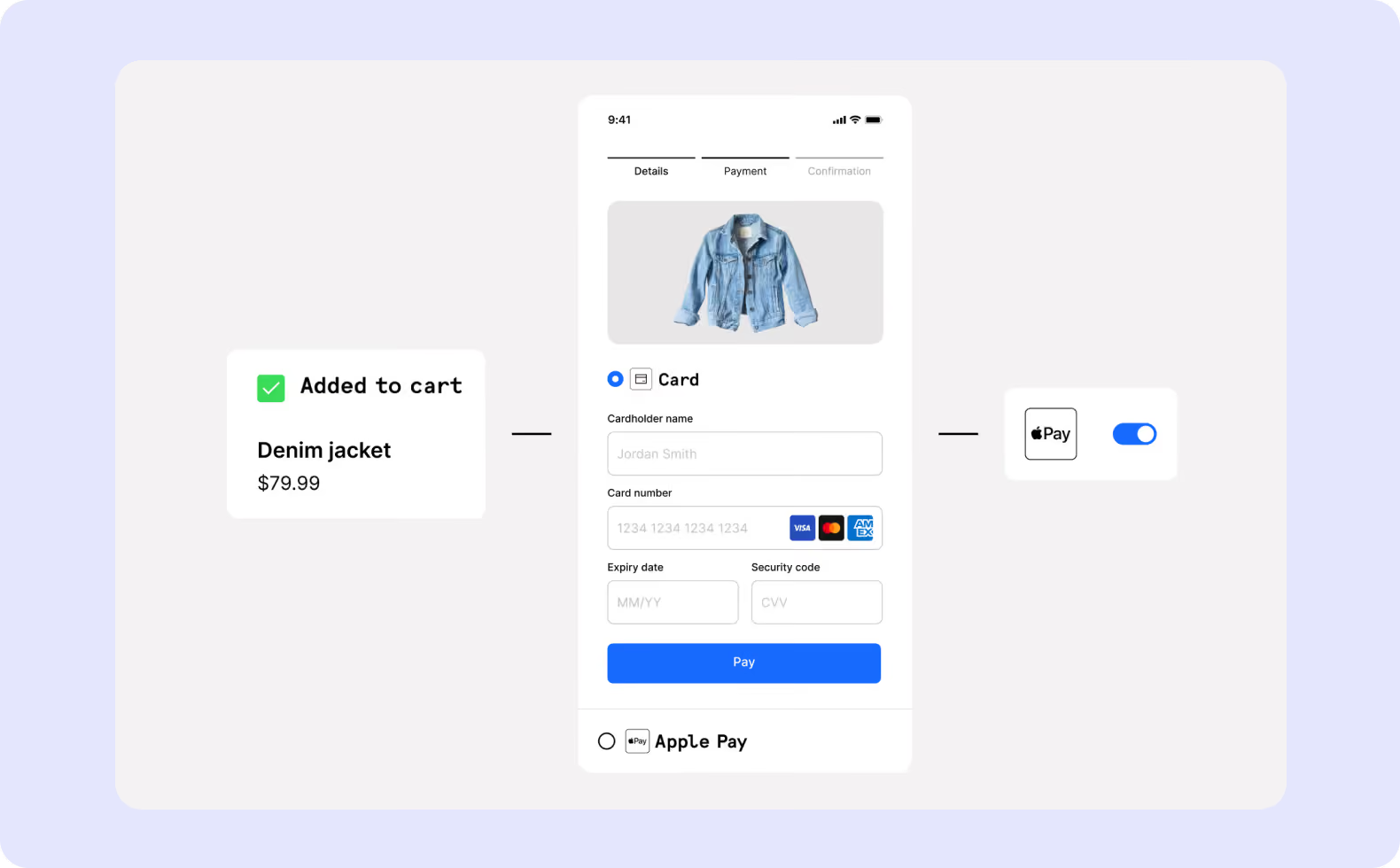
Checkout.com is an enterprise payments platform with products that improve acceptance and recover failed card payments. On the recovery side, Checkout.com offers retry tooling for eligible declined payments and automatic re-attempts.
Main features:
- Scheme updater service designed to update card details.
- Optimization tooling that can adapt transaction data to improve issuer acceptance.
- Aimed at improving recovery rates for merchant-initiated transactions (MITs).
Pricing: By inquiry.
Best for: Mid-market/enterprise merchants who want an integrated acquiring an optimization stack.
4. Recurly
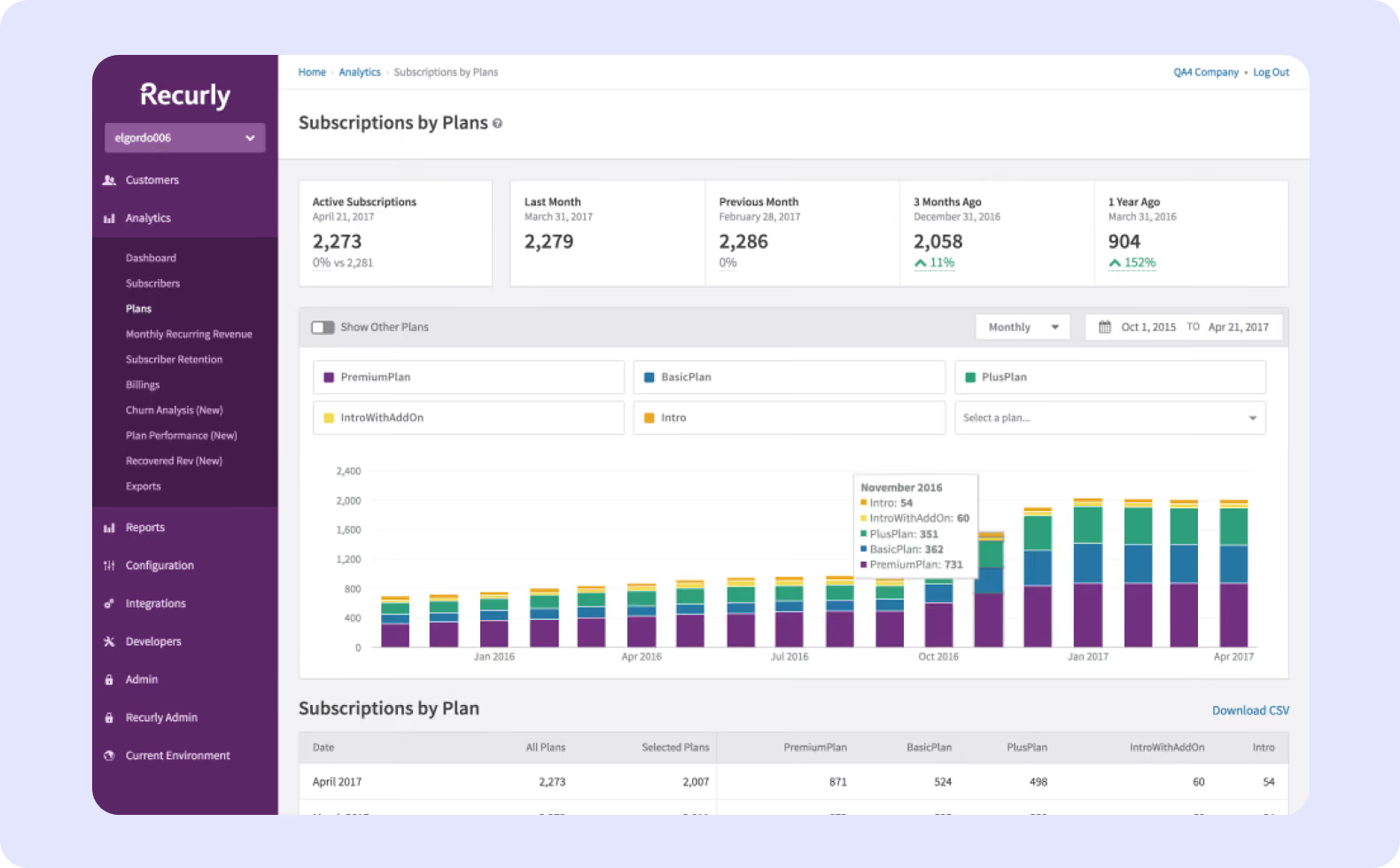
Recurly is a subscription management and billing platform focused on reducing involuntary churn from failed recurring payments. Its recovery motion is classic subscription “decline management,” encompassing intelligent retries and dunning workflows.
Main features:
- Create multiple dunning campaigns and tailor collection strategies.
- Data-driven retry timing to maximize recovery from declined transactions.
- Automatically refreshes card details to reduce declines caused by outdated credentials.
Pricing: Quote-based pricing by inquiry.
Best for: Subscription and SaaS businesses that need a mature billing and involuntary churn toolkit.
5. Paddle Retain
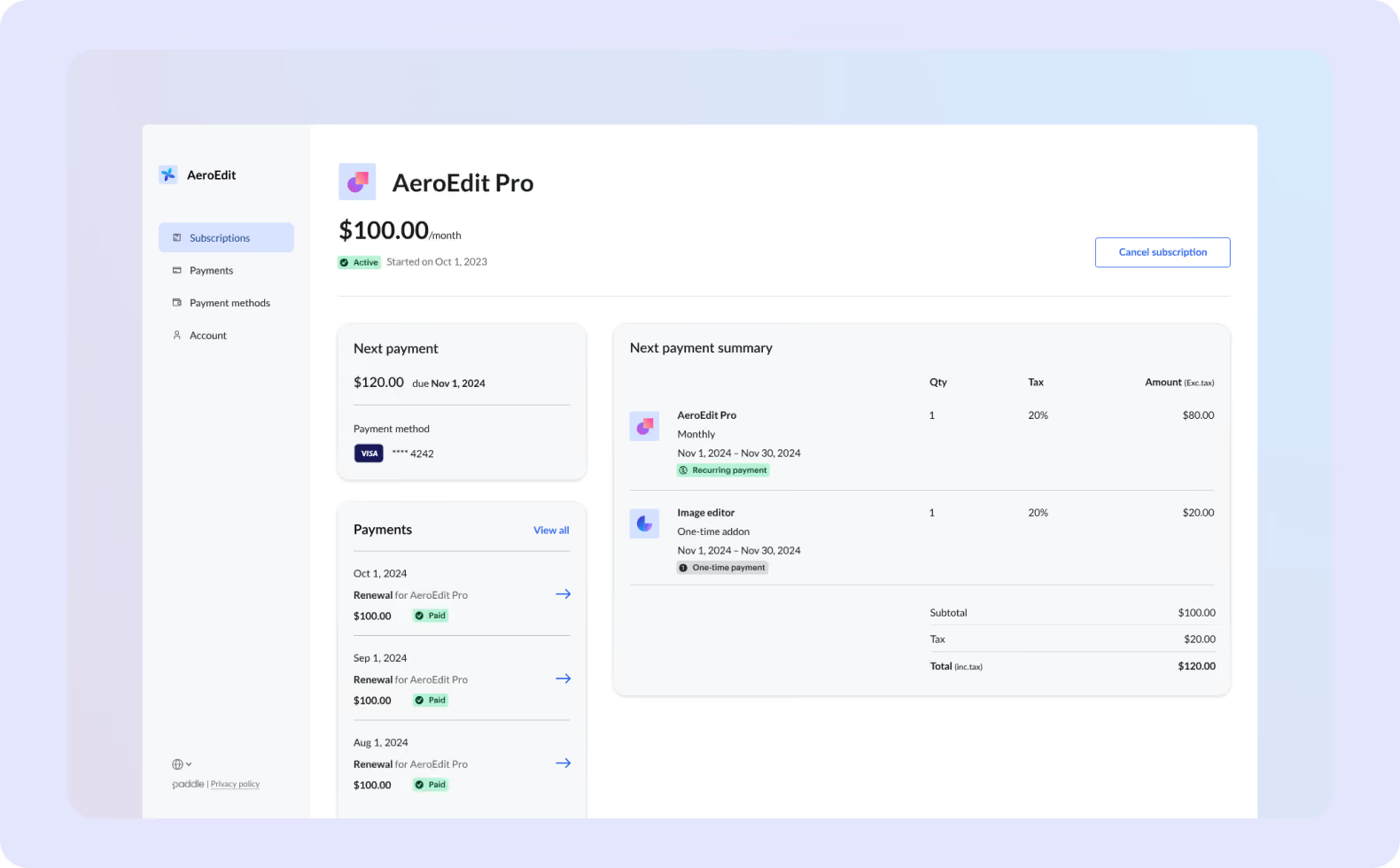
Paddle Retain is a dunning and churn-reduction product built to recover failed subscription payments. It focuses on what happens after an automatically-collected renewal fails. Retain’s Payment Recovery flow runs retries and customer communications to bring the subscription back to paid.
Main features:
- Tactical retries as part of the Payment Recovery feature.
- Configurable notifications and past-due rules.
- Works with Paddle Billing or can be integrated with other billing platforms.
Pricing: Monthly flat fee for smaller companies. By inquiry for larger firms.
Best for: Subscription businesses that want a dedicated dunning and churn intervention layer.
6. Chargebee
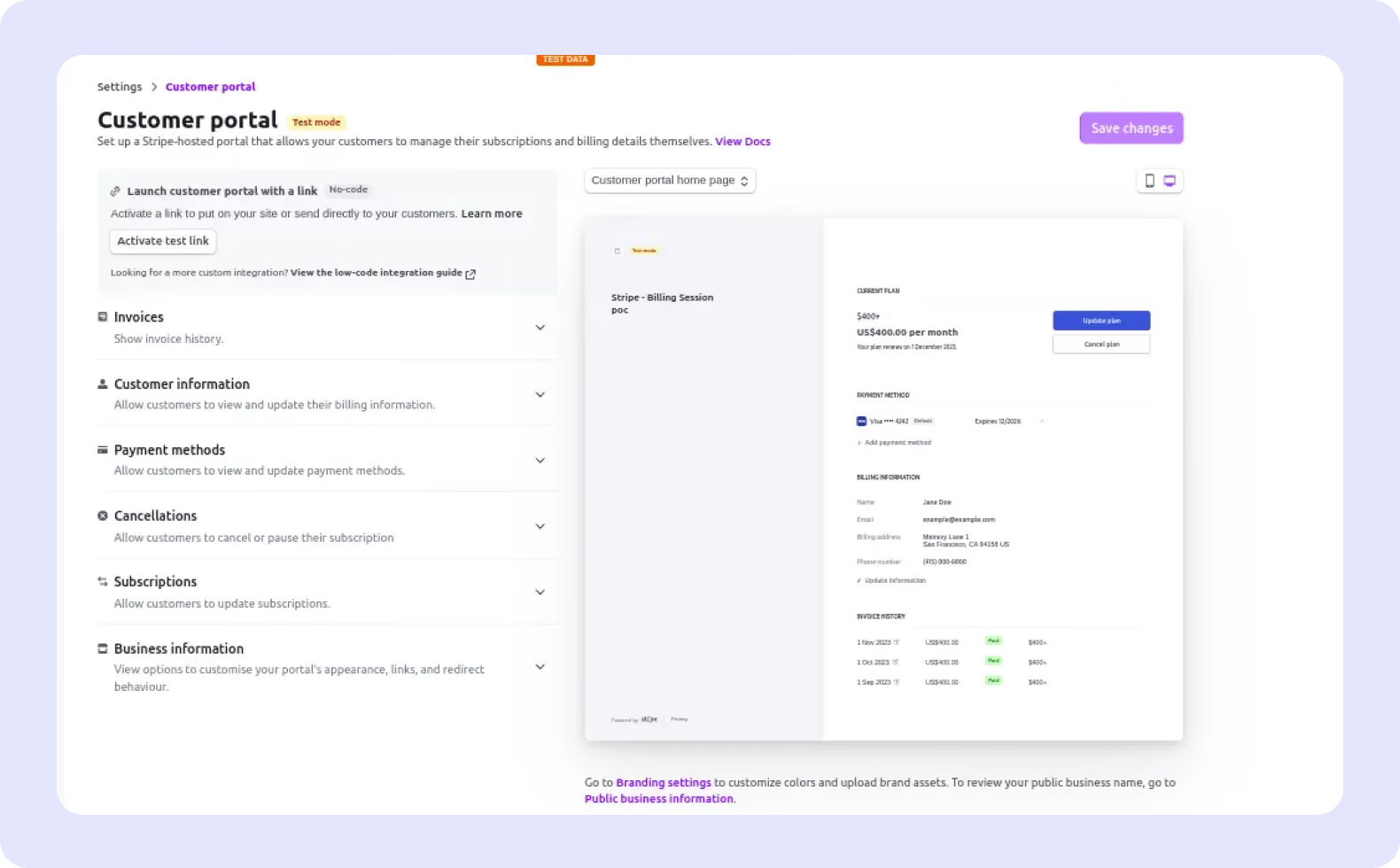
Chargebee is a subscription billing and revenue management platform with built-in payment failure recovery designed to reduce involuntary churn. Its core recovery motion is dunning and retries.
Main features:
- Embedded Payments retry capabilities.
- Configure dunning periods and final actions when retries are exhausted.
- Adaptive retry timing driven by analysis of historical payment patterns.
Pricing: By inquiry.
Best for: SaaS merchants who want billing-first recovery with structured dunning.
7. Slicker
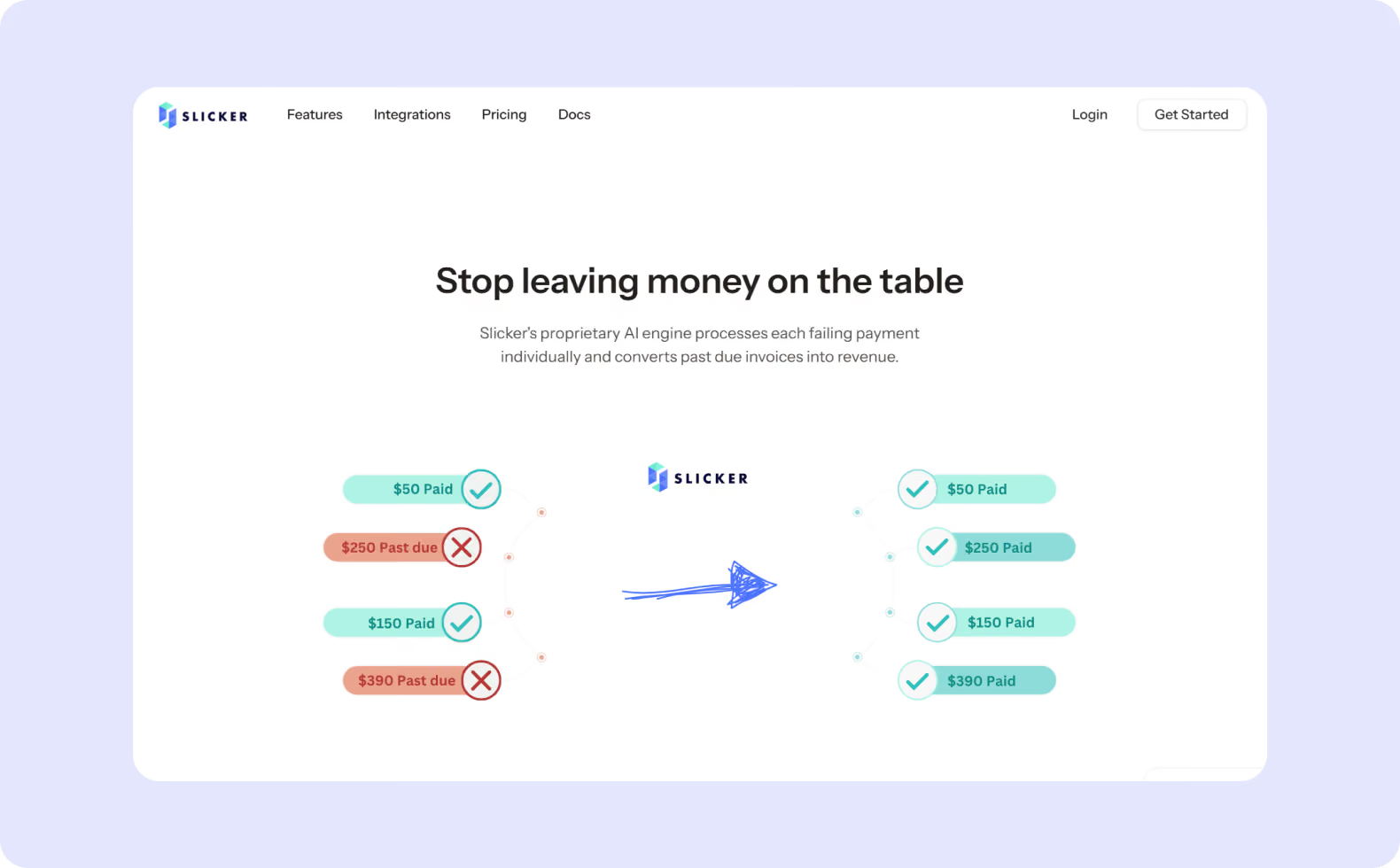
Slicker is a revenue recovery platform focused on subscription payment failures and involuntary churn. It integrates with existing billing and processor setups, designed to convert failed subscription invoices into collected revenue.
Main features:
- Analytics and payment health insights to understand failure reasons.
- Integrations with popular billing and processors, such as Stripe.
- Optimized payment retries to reduce involuntary churn.
Pricing: By inquiry. There’s a free trial.
Best for: Subscription merchants looking for a specialized layer to optimize retries.
8. Juspay Hyperswitch
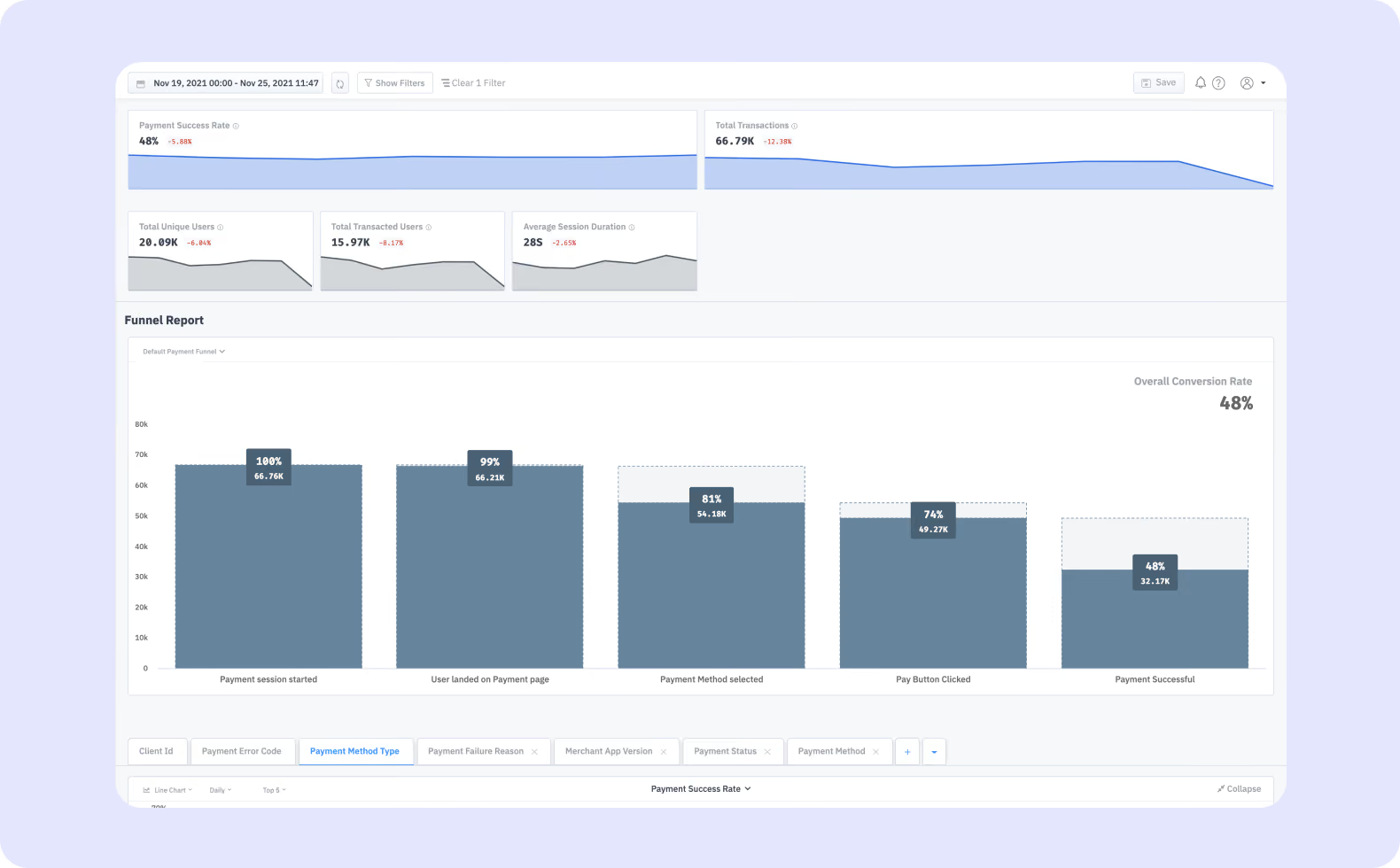
Hyperswitch is an open-source payment orchestration platform designed to give merchants control over how payments are routed and retried across multiple processors. It is infrastructure that helps you improve success rates via smart routing and retry workflows inside your own stack.
Main features:
- Supports self-hosted deployment options and managed offerings.
- Modular, open-source architecture.
- Smart routing to control routing logic across processors.
Pricing: By inquiry.
Best for: Payments teams running multi-processor setups who want orchestration-level control over retries.
9. Payrails
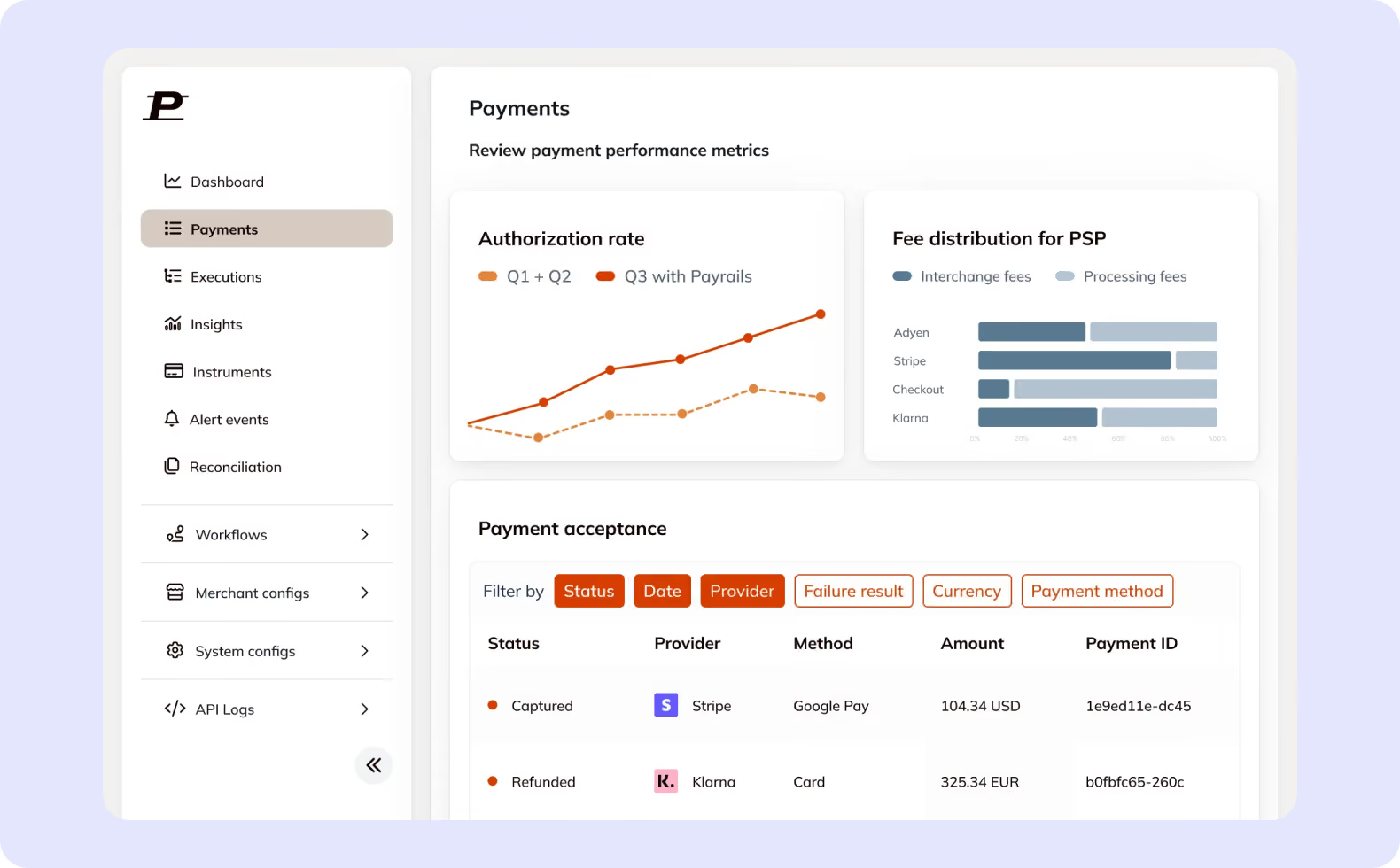
Payrails is a payments orchestration platform designed for enterprise merchants to standardize workflows. Rather than a standalone “recovery vendor,” Payrails is an infrastructure you use to build recovery workflows inside your own stack.
Main features:
- Payment orchestration via a single API.
- Custom workflows to automate payment operations.
- Dynamic routing rules to route transactions based on customer and transaction context.
Pricing: By inquiry.
Best for: Enterprise merchants who want an orchestration platform to build and manage workflow-driven retries.
10. Skio
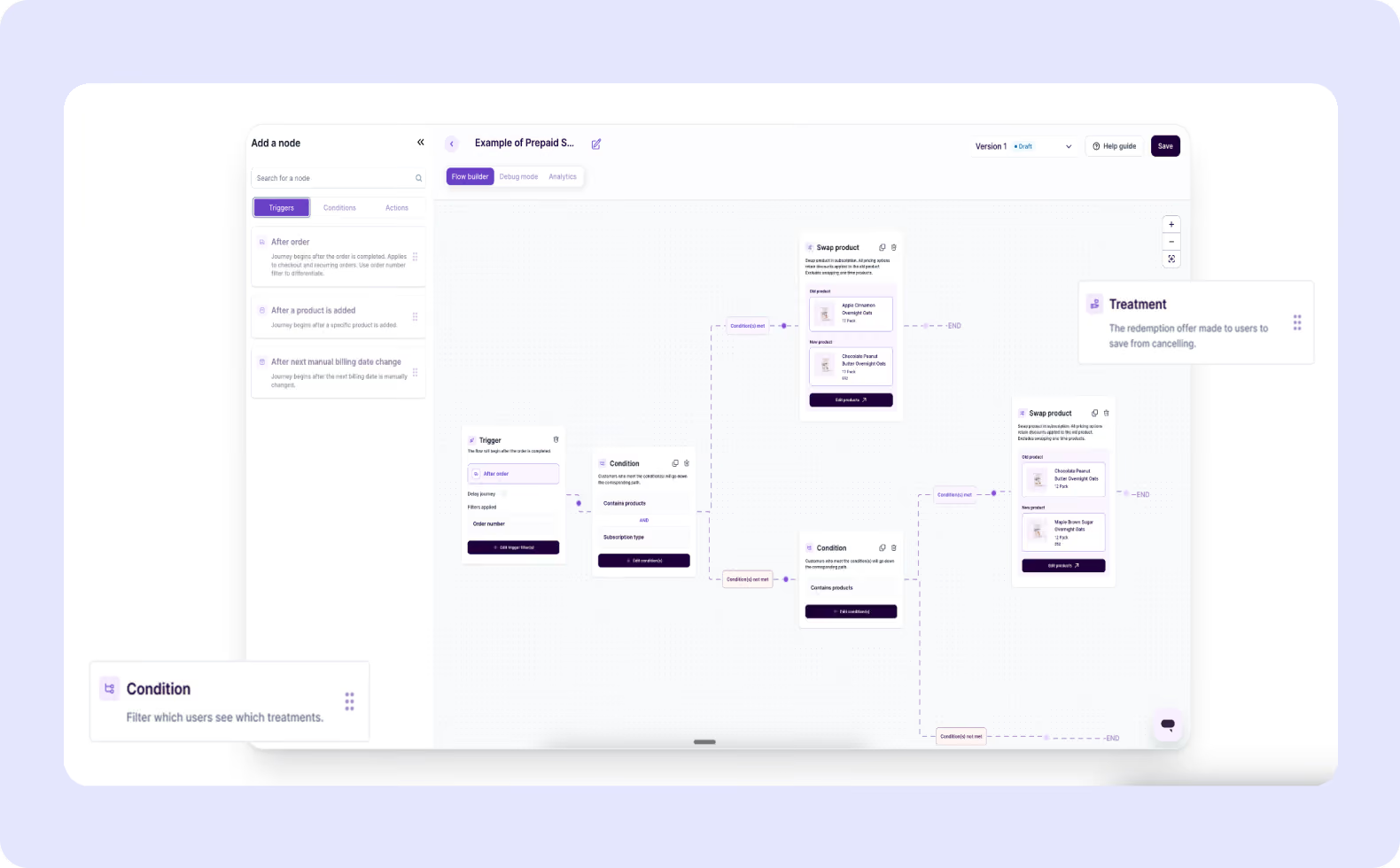
Skio is a Shopify-focused subscription platform that includes built-in tools to recover failed subscription payments. Its recovery motion is dunning-led. When a renewal fails, Skio runs configurable retry phases and can optimize retry timing.
Main features:
- Supports configurable recovery flows.
- Recovery analytics by phase.
- Subscribers can add a secondary payment method that’s automatically attempted if the primary card fails.
Pricing: Varies by plan and contract. Enterprise is available as custom pricing.
Best for: Shopify subscription merchants who want a subscription platform with robust payment recovery.
Next Steps: Evaluate With Real Decline Data
If your struggle is involuntary churn, billing platforms like Recurly and Chargebee are built to improve outcomes with dunning and optimized retries. For infrastructure control, solutions like Hyperswitch help you design how retries and routing work, but recovery still runs inside your own stack and risk model.
If your biggest leakage is issuer-declined card transactions at authorization, especially false declines, the challenge is converting declined transactions into settled revenue. That’s where Paymend takes ownership of declined card payments and runs recovery on its own banking infrastructure. As a result, you can recover revenue without touching checkout UX or compromising merchant account health.
Ready to recover revenue from declined card payments without checkout disruption? Talk with our experts and see how Paymend converts declines into settled revenue.
Paymend is committed to helping businesses make informed decisions about payments and revenue recovery. We strive to provide accurate, practical, and transparent content that meets the high standards we apply across our business.




.svg)