










12 Cart abandonment behavior signals for e-commerce

On this page
Cart abandonment is often treated as a behavior problem. But a meaningful share of abandonment is checkout-stage failure. A customer tries to buy, and the payment stack or the issuer blocks the transaction.
Cart abandonment behavior signals matter because they help you separate normal e-commerce hesitation from payment-driven drop-off.
On peak e-commerce days like Cyber Monday, spending can spike as high as $16 million per minute. And when customers abandon, they’re not always changing their mind: 15% of US online shoppers say they’ve left because the website had errors or crashed.
Checkout-stage failure is usually due to intent getting blocked by infrastructure or issuer decisions. Mislabeling every unconsummated purchase as cart abandonment distorts metrics like conversion and CAC payback, and muddies your forecasting. When your attention is being directed to the wrong issues, your solutions won’t be effective.
What is cart abandonment in e-commerce?
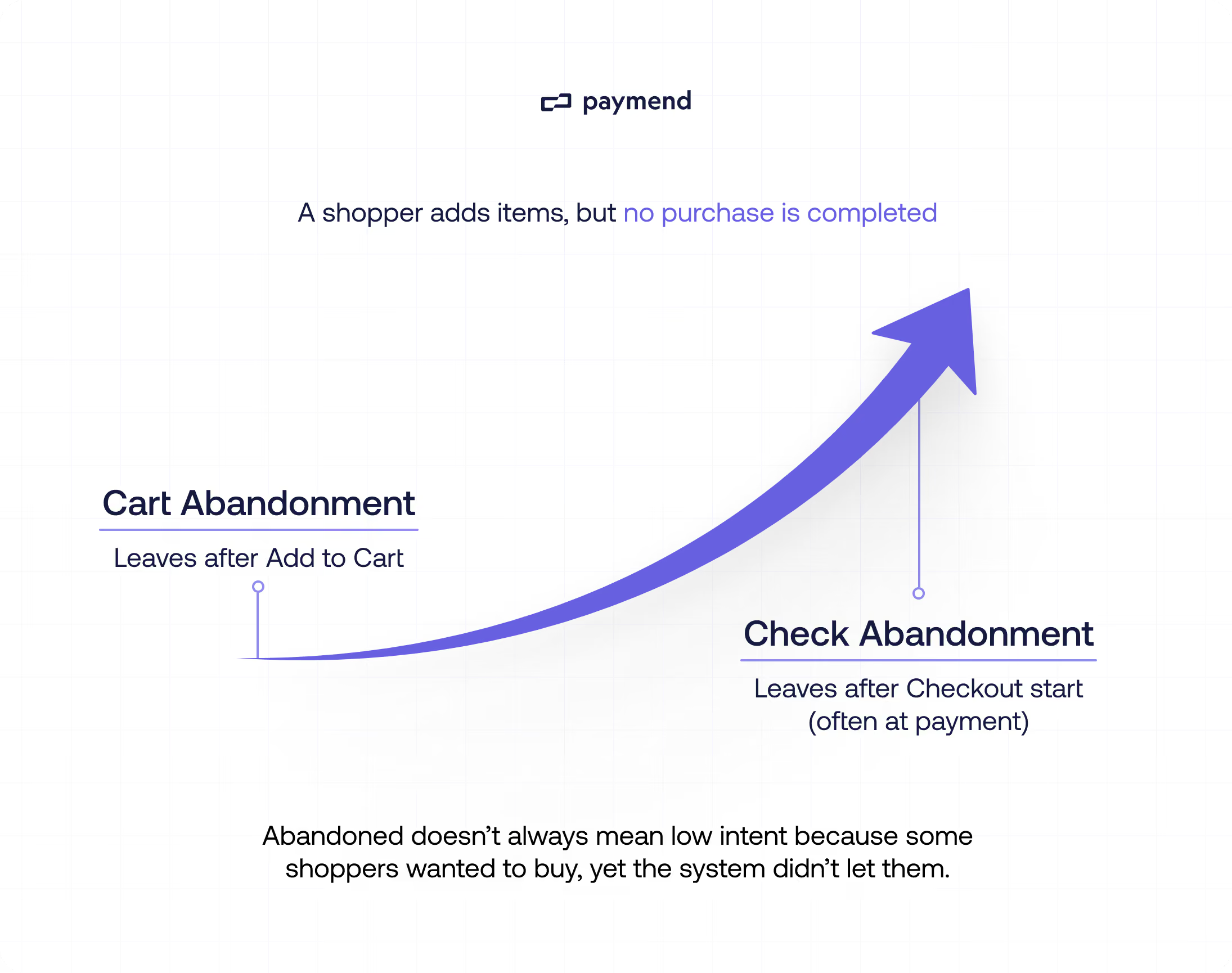
Cart abandonment is when a customer adds items to their cart but never completes the purchase. Sometimes, the term checkout abandonment is used to draw a distinction between abandonments that occur before or after the checkout page is reached.
Cart abandonment signals are the behaviors that correlate with a purchasing journey that’s about to be left unfinished. However, it is important to remember that abandonment doesn’t always mean that the customer changed their mind. Tracking abandonment signals, as opposed to merely quantifying abandonment rates, makes it possible to pinpoint the causes.
Misclassifying payment failures and other technical issues as abandonment will steer you toward inappropriate mitigation efforts at a time when late-stage leakage is higher than ever. For example, due to across-the-board increases in CAC, mobile traffic, fraud controls, and issuer caution.
That misdiagnosis wastes CRO effort and can distort budgeting decisions and customer acquisition strategies. Failures can occur after any of the late-funnel checkpoints, such as add-to-cart, checkout start, payment attempt, and authorization, have been reached.
The 3 types of cart abandonment you need to separate
1. Behavioral
This describes the classic cart abandonment scenarios where a customer puts items in their cart, then has second thoughts and ends the session without checking out. There are countless reasons why this can occur, but it’s not uncommon for buyers to get skittish about a ballooning order total and bail out entirely, or to do some comparison mid-session and depart for other merchants.
2. Checkout UX/performance
In this category, it’s not the consumer, it’s you. Issues with the site or its supporting technology led the consumer to give up before reaching the payment stage. Frequent culprits here are bad form design, costly or slow shipping, web coding errors, and network timeouts.
3. Payments and authorization
The last type is abandonment, which occurs when payment information is being transmitted and authorized. This can result from a wide range of problems, including false issuer declines, timeouts and other payment gateway errors, and conservative issuer risk models (often informed by network signals).
Analytics tools that focus solely on order success often misclassify payment failures, lumping them into previous categories and leading merchants to waste time and money on ineffective remediation that targets the wrong areas. Including payment failures in other categories will also throw off important sales metrics.
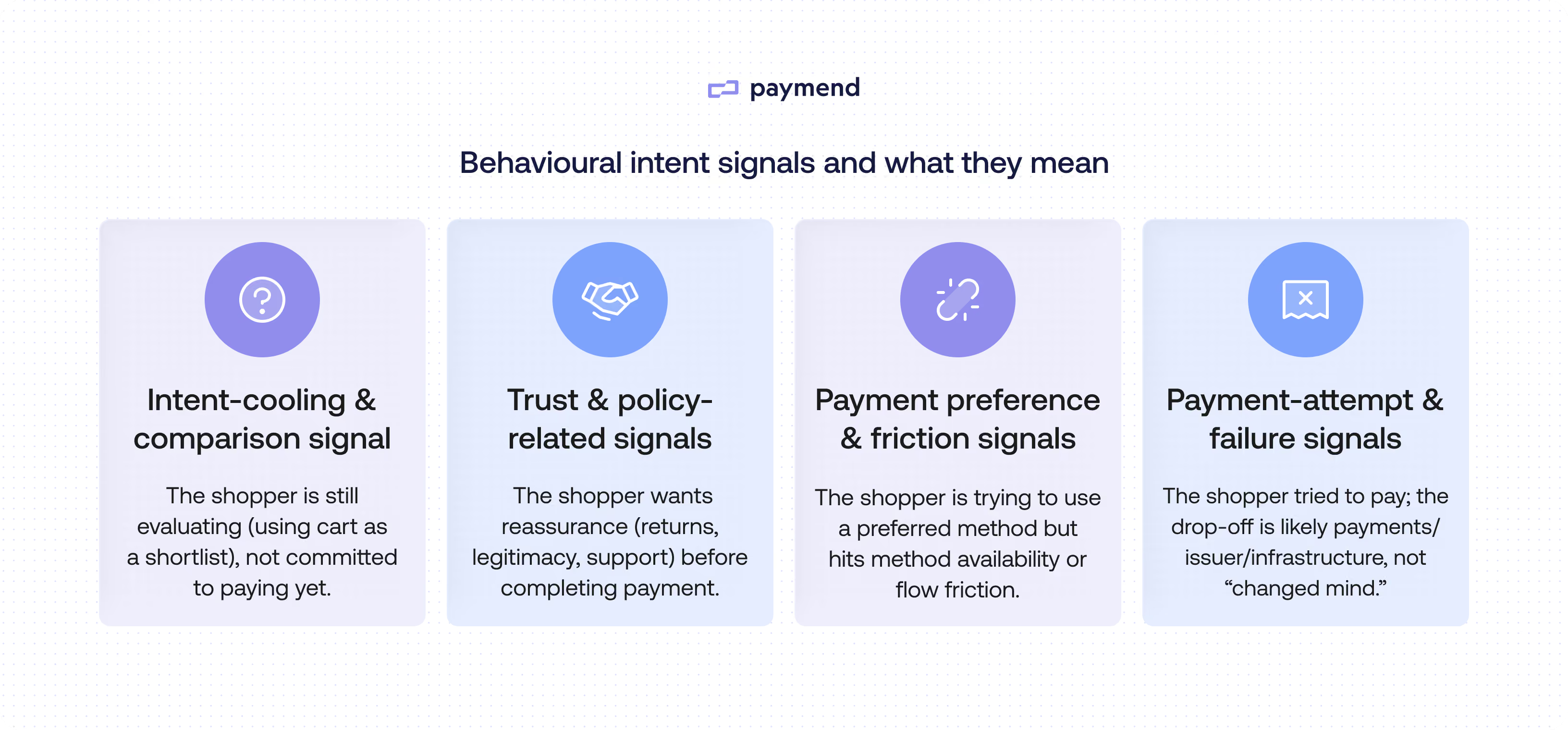
12 Cart abandonment behavior signals in e-commerce (and what each one means)
Intent-cooling and comparison signals
Signal #1, Cart as bookmark
When a customer resumes searching for different products after adding items to their cart and never navigates to checkout, it may indicate they’re using the cart as a bookmark and may never have had any intent to purchase in the near term. Or, they may be moving between your site and web search to compare alternatives and prices.
Signal #2, Save it for later
Customers who move items to a wishlist or save them for later before checking out are usually signaling an intent to delay their purchase, not a total reconsideration. These customers may be especially receptive to reminder emails or promotions.
Signal #3, Checkout as price check
Exposure to the final price on the checkout page, once all promotions and fees have been factored in, can be the reality check that scares some customers off, while others may use the checkout as a final price check calculator on purpose. Greater pricing transparency on product pages may help reduce this behavior.
Trust and policy-related signals
Signal #4, Policy page trust issues
Navigation to policy pages related to returns, warranties, and privacy is a sign of a trust gap. You may also see customers opening FAQ and support pages at the payment step, which is often reassurance-seeking behavior.
Accessible, clear, customer-friendly policies can minimize this behavior and restore confidence to wary customers. These trust signals are often a symptom of confidence gaps, and they’re tightly linked to your broader brand protection strategies.
Signal #5, Credibility check
Trust is also at the root of this signal, when customers click on company info pages, testimonials, and product reviews mid-checkout. The implication is that they may be having second thoughts about the merchant or site itself. If improving these pages and courting better reviews doesn’t lessen occurrences of this signal, some deeper analysis may be required.
Signal #6, Payment page camp-out
When a customer spends an inordinate amount of time on the payment page without clicking submit or engaging in any other logical activity, it’s fair to assume that there may be a mismatch between available payment options and the method they prefer to use, or concerns over the trustworthiness of the payment processor.
Payment method preference and friction signals
Signal #7, Switching payment methods
A customer who bounces between card data entry and their digital wallet is showing signs of mistrust in one or more payment methods, or may be having trouble with authorization.
If method switching happens after an error/decline, it’s likely authorization or infrastructure. If it happens before submit, it’s preference or availability. Indecision can also be a sign that their preferred platform is unavailable (for example, Apple Pay but not Google Pay), and they’re frustrated that they can’t pay the way they want.
Note that changing payment methods after a decline indicates an issuer refusal or technical payment processing issues, not a shift in intent. These customers are high-intent and belong in the next and last signaling category.
Signal #8, Authentication friction
Distinct from generic friction, this signal occurs at authentication prompts like 3-D Secure. Exits at 3DS prompts correlate with issuer risk thresholds and authentication friction, not a sudden drop in purchase intent.
The goal here is to identify the cohort, quantify challenge rates and drop-off, and then reduce unnecessary challenge exposure through conversion optimization workflows for them. It’s even better if you can do this without adding steps or re-authentication requirements to your checkout experience.
Signal #9, Misremembered CVV
Repeated CVV edits indicate uncertainty over payment credentials. When legitimate customers throw off this signal, it often means that they don’t have the card on hand and can’t remember the CVV.
High-intent payment attempt and failure signals
Signal #10, Submitted without success
This is the cart abandonment signal most strongly associated with undiminished purchase intent. It is defined by a payment or authorization attempt that is not followed by a matching success event.
Signal #11, Multiple authorization attempts
This signal also rides with high intent, but it carries risk, too. Multiple authorization failures may be evidence that the customer is trying to diagnose different decline types and find a working payment or authentication method. When a card is declined, and the customer immediately reattempts, don’t treat them the same as customers who have suddenly decided not to purchase.
A spike in issuer declines within a short window may suggest a change in issuer behavior or risk modeling. Gateway or network timeouts are another infrastructure issue that can look a lot like abandonment at first pass. Or, you might see integration errors or factors like fraud attacks triggering risk responses.
Signal #12: Illogical returning customer behavior
When a returning customer reaches checkout but doesn’t convert, the issue is usually with payments or the issuer, not your merchandising or UX.
What to do when cart abandonment behavior signals point to payments
Declines are often recoverable, but you don’t want to indiscriminately ram retries through on your Merchant ID without guardrails.
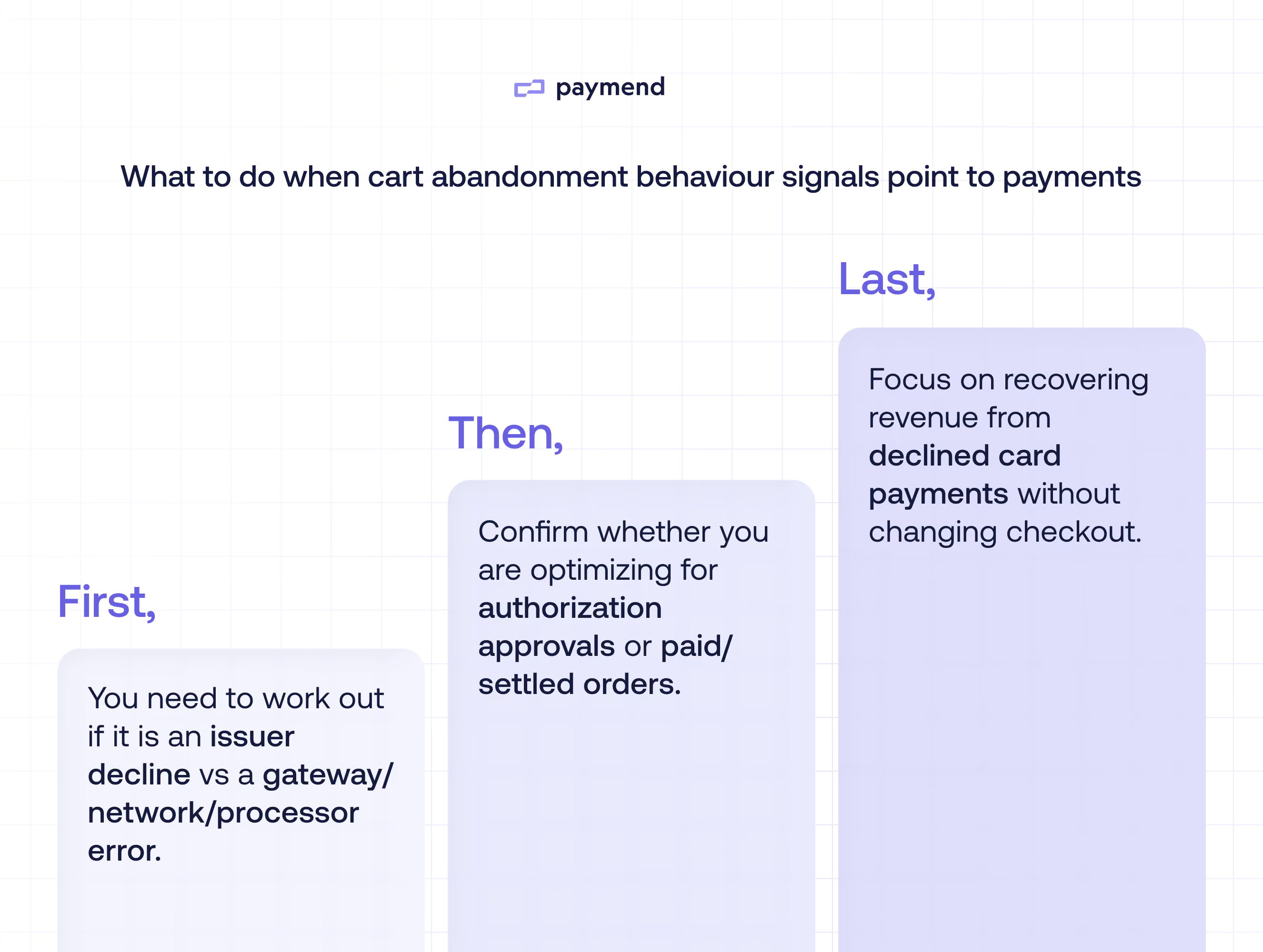
If declines persist after best-effort routing, the first step is to determine whether it’s an actual issuer decline or an error at the gateway, processor, or network level. Then you’ll know whether to optimize for authorization approval or paid/settled orders and can focus on recovering revenue from declined card payments without making needless UX changes.
When the signals are telling you that a customer attempted payment but didn’t convert, treat it as a payments outcome, not cart abandonment. Start by separating issuer declines from gateway and network errors. If routing and failover on your own MID still leaves you with a large pool of issuer declines (especially generic declines, which often prove to be false), Paymend becomes the best recovery lever.
Paymend takes over eligible declined card transactions, reprocesses them on Paymend’s own infrastructure, and carries the fraud liability. That means you can recover revenue without adding checkout steps or pushing extra risk onto your own merchant setup. You decide what to send, and Paymend can filter out traffic it considers too high-risk to pursue.
Separate behavioral drop-off from payment failure
Cart abandonment isn’t always a choice. Some customers give up because they’re blocked at every turn by payment issues, and unlike behavior-driven cart abandoners, their intent to purchase never falters. Better attention to signals can help you address these issues more effectively, leading to greater conversion truth, faster CAC payback, and more accurate forecasting.
Issuer declines that persist after best-effort routing are hard to solve on your own merchant accounts without increasing risk. Paymend is the declined card payment recovery lever: Paymend takes ownership of eligible declined card transactions, retries them on Paymend’s own infrastructure, and assumes fraud liability for recovered transactions. Merchants control what gets sent, Paymend can veto high-risk traffic, and recovery happens with zero checkout disruption.
Book a demo today for a detailed look at how much revenue you can recover from declined card transactions.
Paymend is committed to helping businesses make informed decisions about payments and revenue recovery. We strive to provide accurate, practical, and transparent content that meets the high standards we apply across our business.





.svg)