










7 E-commerce conversion rate optimization strategies for 2026

On this page
What should you do if your CRO dashboard says you’re winning while revenue stays flat? Tactics like optimizing for order completion rather than settled revenue, or over-discounting products to run up sales, can make metrics look good while your income is tanking.
Creating orders is not the same as settling revenue, and the CRO programs that deliver the best results treat conversion as an end-to-end system. A side effect of e-commerce growth is that conversion leakage becomes an increasingly significant loss each year.
Yet, a meaningful share of that leakage happens at authorization, when legitimate card attempts get declined. Nearly half of merchants estimate that up to 5% of legitimate orders are incorrectly declined as fraud, representing ~$50B in lost revenue. That’s potentially recoverable revenue, so it’s time to act on the best e-commerce conversion rate optimization strategies. You need effective practices built around the markets you’re navigating right now, tied to tangible, revenue-based goals.
What is e-commerce conversion rate optimization?
E-commerce conversion optimization means maximizing the number of user sessions that complete some desirable action, like subscribing to email updates, requesting a sales call, or making a purchase. The purpose of CRO is to remove friction and blockers across the entire purchasing journey.
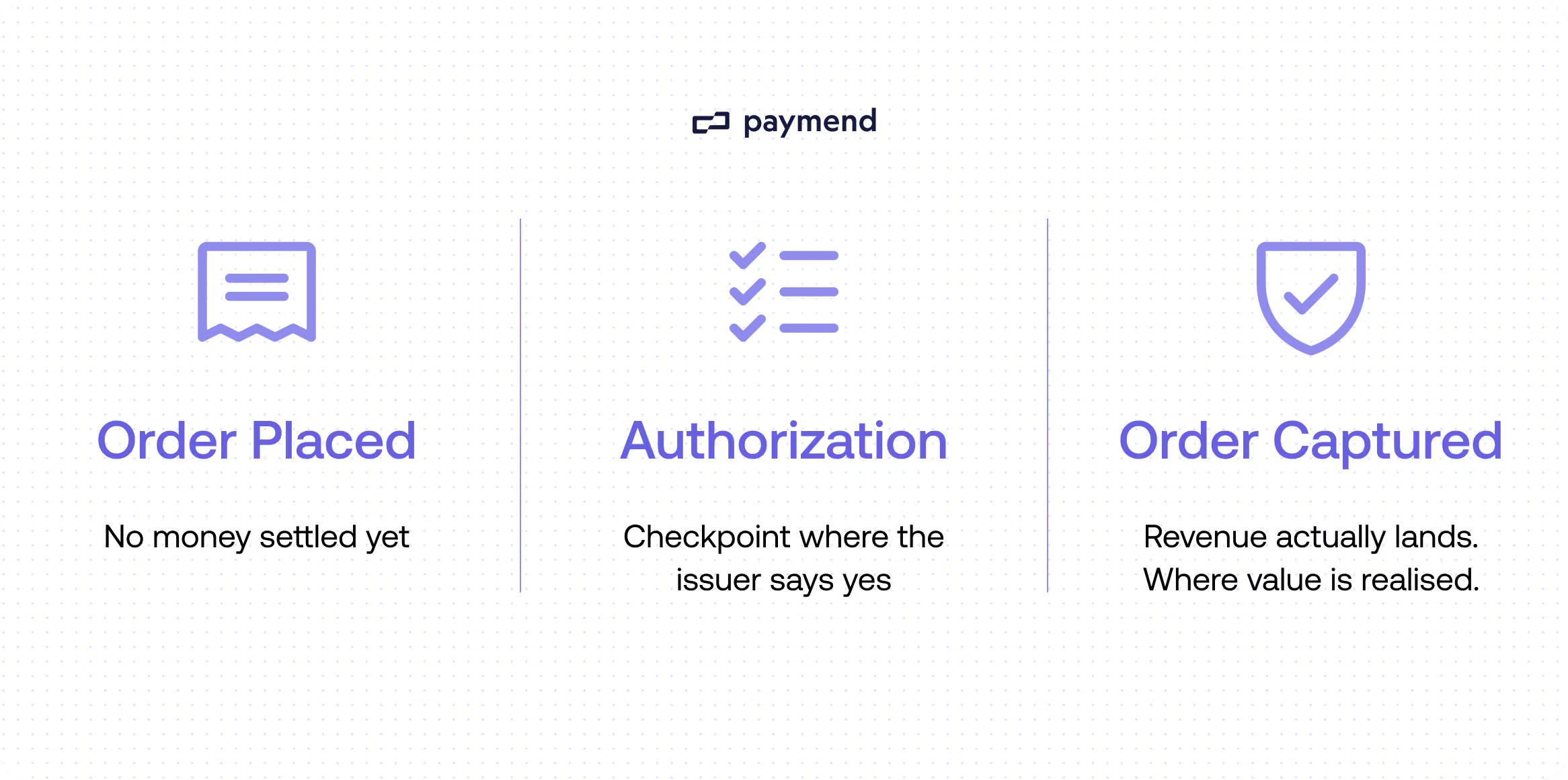
The final and most important measure of success for an e-commerce merchant is settled revenue. Even completed checkouts can fail to materialize in your bank account, so settled revenue must be the goal for a truly optimized approach. Earlier checkpoints in the journey, such as add-to-cart and authorization success, can be tracked separately as micro-conversions.
A significant portion of checkout drop-off is due to payment failure, not indecision on the buyer’s part. Optimizing to eliminate these errors can have additional benefits, such as reducing exposure to fraud and chargebacks, lowering customer acquisition costs, and increasing your profit margins.
How to calculate e-commerce conversion rate
The basic conversion rate formula is simple:
Conversion rate (%) = (Conversions ÷ Sessions) × 100.
For example, if you have 1,500 sessions and 30 conversions: (30 ÷ 1,500) × 100 = 2%.
What’s a “good” conversion rate? It really depends on your industry, target market, and other factors. Cohort analysis can help you establish a reasonable baseline that adjusts based on seasonality and shifts from your marketing campaigns, such as changes in pay-per-click advertising traffic.
There are conversion rates you can calculate specific to various stages of the sales funnel, for example:
- Add-to-cart rate = carts filled ÷ user sessions
- Checkout start rate = checkout starts ÷ carts filled
- Checkout completion rate = orders ÷ checkout starts
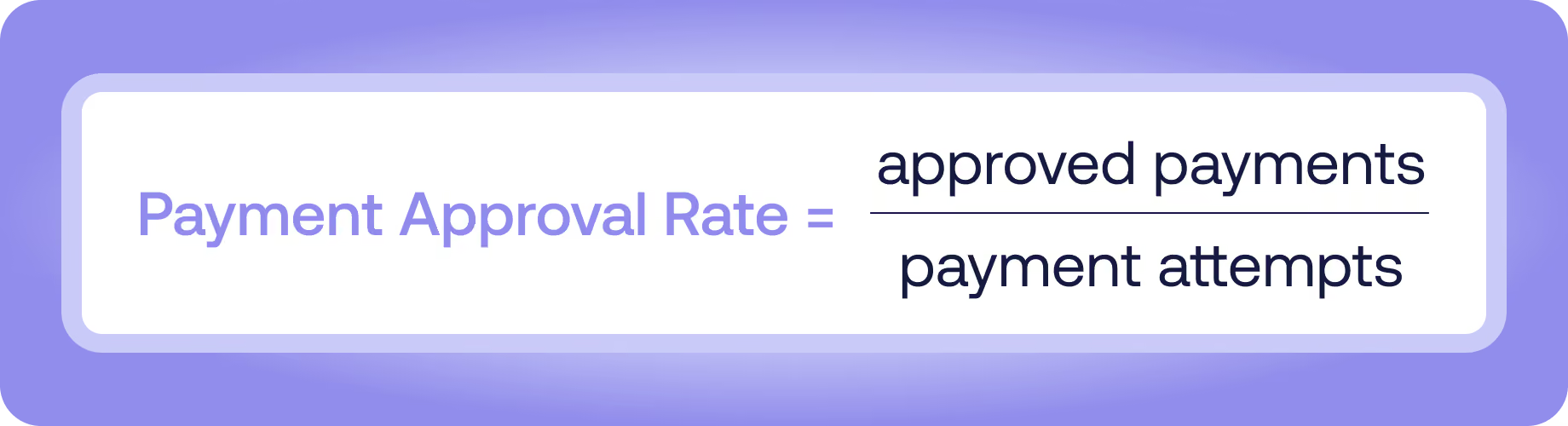
- Payment authorization rate = issuer approvals ÷ attempted authorizations
- Payment capture success rate = successful captures ÷ approved authorizations
- Payment settlement success rate = settled transactions ÷ captured transactions
Another important CRO metric (this is the one your finance team cares about) is revenue per session (RPS), which is total revenue ÷ total number of sessions. And separate intent drop-off from payment failure.
Keep in mind that cart abandonment is a customer choice; issuer declines are a payment decision at authorization. If you mix them, you’ll misread where revenue is leaking and under-invest in approval-rate optimization.
Why payment declines can distort your conversion rate
A submitted order might meet the conditions you’ve laid out for a successful conversion, but be sure you aren’t missing the final, crucial layer. If your CRO reporting stops at “order created” or “checkout complete” and doesn’t capture settled payments, your conversion “wins” won’t be reflected in your revenue, where it counts.
Post-checkout drop-off is often related to issuer declines (like false positives) and payment stack failures (e.g., network timeouts). The customer is at the very end of the sales funnel here, having passed all the decision-making thresholds related to product and shipping.
At this point, the root causes of involuntary failure often lie with issuer declines or payment stack failures. A bad experience jeopardizes not only the specific conversion but the entire attempt at customer acquisition.
To realize the full revenue potential of conversion, CRO strategies need visibility into declines and a way to retry the recoverable ones without impacting the buyer journey.
7 E-commerce conversion rate optimization strategies to rely on
1. Improve product page clarity
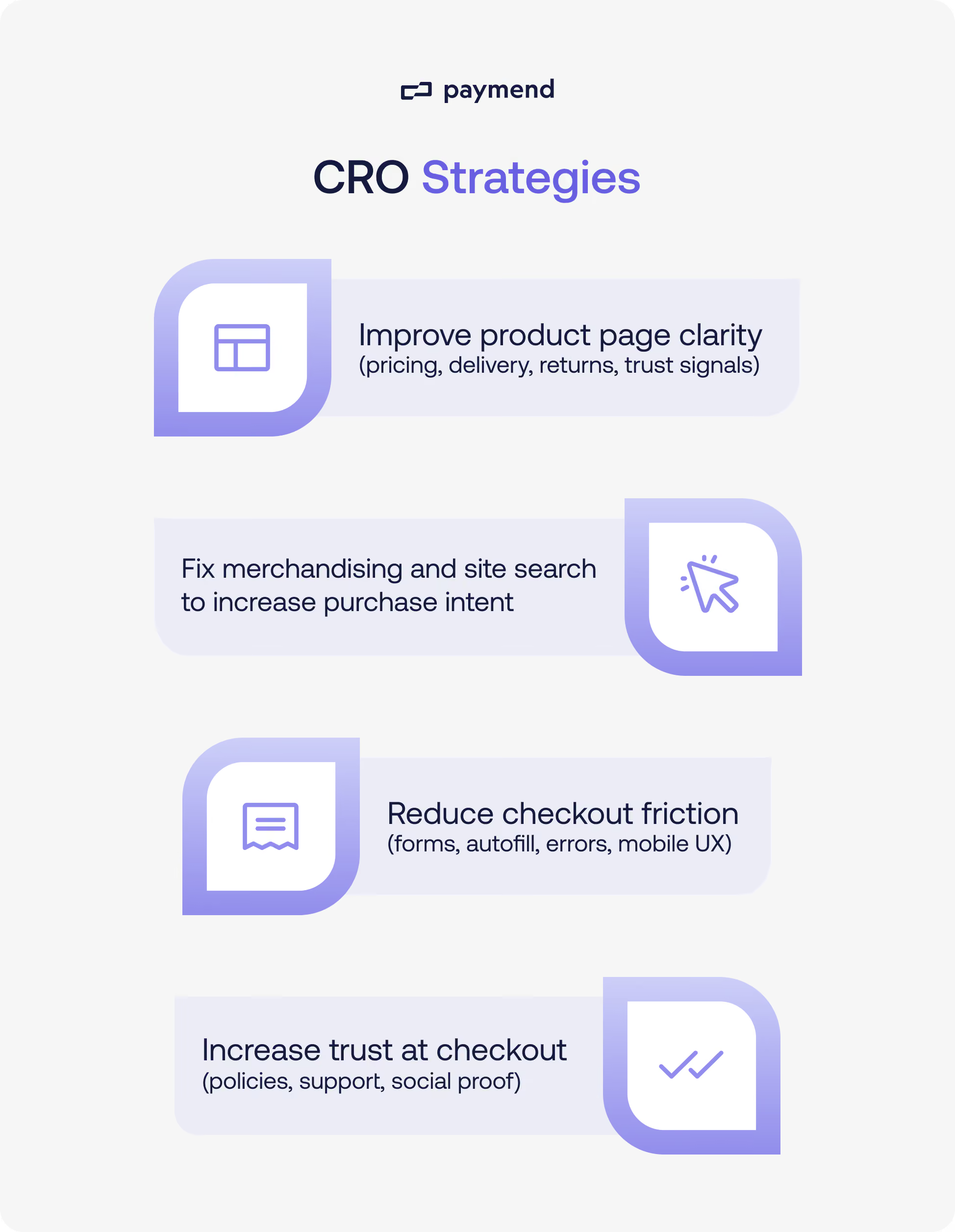
When product listings don’t match up with the expectations the customer had when they clicked on your site, conversion doesn’t happen. Communicate the value and benefits of your product clearly and directly with high-quality images and an easy-to-follow page structure. Help your customers come to a confident decision by including trust signals (such as reviews or testimonials) and descriptions that balance relevant detail with conciseness.
As more shopping journeys start in AI-generated results, generative engine optimization is becoming part of CRO too. Your category and product pages need a clear structure and specifics that models can interpret accurately.
You can smooth the road to conversion even further by optimizing for mobile browsers and making sure that pricing, shipping, return policies, and similar information are prominently displayed.
2. Fix merchandising and site search
When customers find what they’re looking for, purchasing intent goes up, and it doesn’t hurt when they also discover exciting products they didn’t even realize they needed. Every improvement you can make to your merchandising and site search features can support conversion, especially when informed by retail pricing intelligence and competitiveness.
Personalized results with strong visuals grab attention and build loyalty, and AI is making it easier than ever to suggest products that picky customers will actually care about. On the search side of things, use predictive autocomplete and deep synonym dictionaries to keep relevant results flowing.
3. Reduce checkout friction
Friction work helps only if approvals and capture aren’t the bottleneck. You don’t want anything to stand in the way of a customer who has made up their mind to buy something. Keep the process moving along briskly. Minimize required fields and autofill them wherever possible. Automate error-checking. In this strategy as well, mobile optimization is key: most of your customers are probably shopping on their phones.
Note that too much streamlining can run you into other issues, so it’s important to strike a balance between things like offering guest checkout and varied payment options, and your need to provide (and signal) strong data security and fraud prevention measures.
4. Increase trust at checkout
Your checkout might be friction-free, but customers can still lunge for the brakes if they don’t feel confident finalizing a purchase. Trust starts with transparent pricing, with fees and shipping options clearly spelt out in advance—checkout is no time for surprises.
Live customer support can be a critical backstop when questions or doubts surface at checkout. You can also encourage follow-through on conversion by providing security certification badges and other proofs at the payment options step. This approach is part of broader brand protection strategies that reduce fraud risk and protect customer trust.
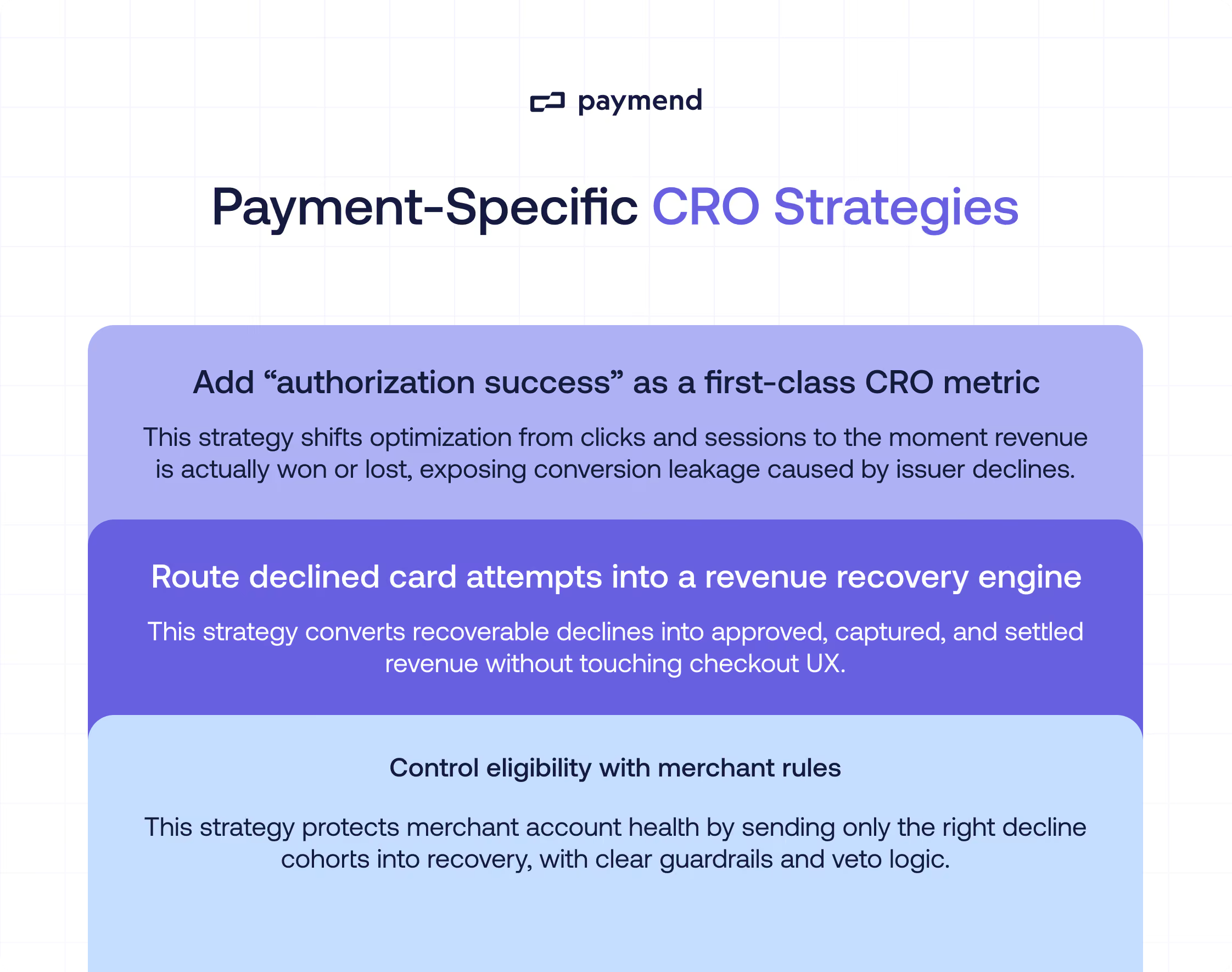
5. Add “authorization success” as a first-class CRO metric
Payment declines are often unrelated to user interface or purchase intent issues, so track authorization success separately from other checkout completion problems using the payment authorization rate formula described above. Eligible declines are typically soft declines or false positives, not hard failures like persistent insufficient funds.
Many declined payments are recoverable even without customer intervention. Tracking declines will prevent you from mislabeling them as “cart abandonment” and pursuing ineffective fixes. Once you separate intent drop-off from issuer declines, you can feed that insight into product roadmaps and prioritize the fixes that unlock settled revenue.
6. Route declined card attempts into a revenue recovery engine
When a card payment is declined, treating it like standard checkout drop-off hides a real revenue lever. The better move is to separate eligible declines and route them into a dedicated revenue recovery engine.
For example, Paymend takes ownership of eligible declined card payments and runs recovery on its own infrastructure, so you can pursue incremental approvals without putting your merchant accounts or risk posture under pressure.
Revenue recovery platforms that operate according to this model can recover conversions when purchase intent was high, but the payment failed due to technical issues, preserving revenue without changing the buyer journey.
7. Control eligibility with merchant rules
Payment recovery works best when it’s guided by precision logic informed by experience. Conversion at this stage can be optimized by applying your knowledge and common sense to define which declines you’ll send for recovery.
Common useful criteria include returning customer status, average order value, specific regions, and subscription renewals. Data analytics will enable you to refine the veto logic you use to exclude traffic you don’t want retried, and solutions like Paymend can automatically identify and reject high-risk attempts.
Conversion only counts when revenue settles
Conversion is a multi-stage system, but the commercial outcome is simple: intent only counts when revenue settles. When you measure the funnel through that lens, a meaningful share of “drop-off” shows up at the last mile as issuer declines and payment failures, not a change of customer intent.
If approval rates are capping growth, you need a way to convert eligible declined card transactions into settled revenue without touching checkout UX. Paymend does this by taking ownership of declined card payments, running recovery on Paymend’s own infrastructure, and assuming 100% fraud liability, while giving merchants clear control over what gets sent for recovery.
If you want to quantify how much settled revenue you’re losing to false declines and what you can recover safely, book a demo with Paymend.
Paymend is committed to helping businesses make informed decisions about payments and revenue recovery. We strive to provide accurate, practical, and transparent content that meets the high standards we apply across our business.





.svg)