









Top 10 revenue recovery solutions

On this page
Most teams obsess over growth: more channels and more spending. But the biggest lever for customer acquisition cost (CAC) and involuntary churn payback is often the revenue you’re silently losing. It doesn’t show up as a single line item. It shows up as lower conversion and mysterious gaps between demand and cash.
Every new cohort you acquire inherits the same failure points as you scale, including failed or declined payments that trigger involuntary churn. In fact, failed payments could leave subscription companies with more than $129 billion in lost revenue in 2026 from involuntary churn tied to payment errors.
The categories of revenue recovery solutions are not one-size-fits-all. Different solutions attack different failure points, from cart abandonment to turning declined card transactions into settled revenue. Let’s review the top revenue recovery solutions by category.
What are revenue recovery solutions?
Revenue recovery solutions are tools and services that help merchants capture revenue that would otherwise be lost. They do this either by preventing failures upstream or by recovering revenue after a transaction fails.
Common sources of lost revenue include:
- Declined or failed card payments: Transactions that don’t get approved at the point of sale or fail during billing, leaving revenue on the table even when customer intent is strong.
- False fraud declines: Legitimate customers get blocked by issuer or network risk decisions and limited signal, not always actual fraud.
- Expired cards: Stored credentials go stale when cards roll over or are replaced, leading to recurring charges failing unless credentials are updated.
- Insufficient funds: Customers may have temporary liquidity issues, so timing and retry strategy can determine whether the payment ultimately settles.
- Operational issues: Process gaps, such as missed invoices or failed collections workflows, can prevent otherwise collectable revenue from being captured.
Some revenue recovery solutions focus on cart abandonment or try to reduce failures in the first place (e.g., fraud prevention tools). Others specialize in recovery after the failure occurs. For example, retrying declined card transactions.
Top 10 revenue recovery solutions
Some revenue recovery solutions span multiple categories. The right choice depends on where revenue is leaking in your journey and which failure point you need to fix first.
Category 1: Subscription and SaaS revenue recovery
Subscription and SaaS revenue recovery solutions help merchants reduce revenue leakage from payment failures that interrupt billing cycles and distort customer acquisition cost payback. They sit around the billing and payment layer, turning “attempted revenue” into settled revenue.
Most tools in this category focus on a few core levers, such as smart retries (e.g., align it with payroll cycles) and dunning strategy, to reduce failed payments over time. The best solutions make recovery measurable and controllable, through proven value like recovered revenue and approval uplift. Revenue recovery solutions implement rules and risk safeguards, so merchants can scale recovery without increasing fraud exposure.
Common benefits and features in this category
- Lower involuntary churn: Recover failed payments before they turn into cancellations.
- Higher net revenue retention: Convert more renewal and rebill attempts into settled revenue.
- Cleaner unit economics: Improves customer lifetime value payback by increasing the percentage of acquired customers who actually monetize.
- Retry and payment optimization logic: Timing, sequencing, and issuer-aware retry approaches.
- Controls and reporting: Rules, segmentation, and visibility into why payments fail and what gets recovered.
1. Paymend

Paymend is a specialist revenue recovery engine focused on revenue lost to failed or declined card payments at checkout. It’s not a general “recovery suite” that spans invoicing and customer follow-ups. Rather, it is purpose-built to convert falsely declined card transactions into successful approvals.
Paymend takes ownership of the declined transaction and retries it on Paymend’s own banking infrastructure. That means merchants can pursue approval rate recovery without taking on incremental fraud risk or putting their own merchant accounts under unnecessary pressure.
Key features
- Approval rate recovery focused on false declines
- Merchant control over which declined transactions are sent to Paymend
- Paymend can filter out high-risk traffic so recovery efforts don’t widen fraud exposure
- No added steps for the buyer and no re-authentication flows introduced by Paymend
Best for: Merchants losing revenue to issuer declines and false declines at checkout who want to recover approvals without adding checkout friction.
Pricing: By inquiry.
Category 2: Pricing, billing, and revenue leakage prevention
Pricing and billing platforms ensure you can invoice correctly and collect consistently across subscriptions, usage, add-ons, proration, credits, discounts, and contract changes. For SaaS and subscription merchants, these systems reduce the “self-inflicted” leakage that can result from messy manual invoicing.
Common benefits and key features in this category
- Fewer billing errors and exceptions: More accurate proration and invoicing reduce avoidable leakage.
- Faster pricing iteration: Centralized catalogs and packaging make it easier to launch new plans and usage models.
- Cleaner quote-to-cash ops: Better alignment between sales terms and finance reporting.
- Usage-based and hybrid support: Things like rating and invoicing for consumption models.
- Automation and integration: CRM connectivity and standardized workflows for finance. Teams often pair these systems with AI assistants to reduce manual billing exceptions.
2. Chargebee

Chargebee is a subscription billing and monetization platform that helps merchants run recurring and hybrid billing. It gives users more control over catalogs, invoicing, dunning, and reporting, so pricing changes and billing complexity don’t turn into manual finance work.
Key features
- Flexible billing models (subscriptions, usage-based, hybrid) plus checkout and self-serve portal options.
- Usage metering and broad payment gateway integrations.
- “Smart dunning” and advanced invoicing capabilities in higher tiers.
Best for: Subscription businesses running recurring and hybrid billing requiring stronger catalog control.
Pricing: The Starter package is free for the first $250K cumulative billing. Performance is $599/month. Pricing is by inquiry for Enterprise customers.
3. Zuora

Zuora Billing is an enterprise recurring billing and monetization platform built for subscriptions, usage-based pricing, and hybrid models. Zuora customers use it when order-to-revenue workflows and compliance requirements are too complex for lightweight billing setups.
Key features
- Automates billing and revenue processes across subscription and usage-based models.
- Integrates with CRMs and payment gateways to support end-to-end order-to-revenue workflows.
- Supports flexible billing models, e.g., one-time or recurring.
Best for: Larger subscription businesses with complex order-to-revenue requirements.
Pricing: By inquiry.
4. Stripe Billing

Stripe Billing is Stripe’s subscription and recurring billing product. It is used to model subscriptions and usage-based pricing, manage invoices and subscription lifecycles, and automate retry and recovery logic.
Key features:
- Subscription and recurring billing management via API and Stripe Dashboard.
- Smart Retries and configurable automations for recovery and retention workflows.
- Usage-based billing support, quoting, and invoicing tooling.
Best for: Teams already using Stripe’s broader payments stack.
Pricing: The pay-as-you-go model is 0.7% of billing volume. Alternatively, you can lock into a tiered contract.
5. Alguna
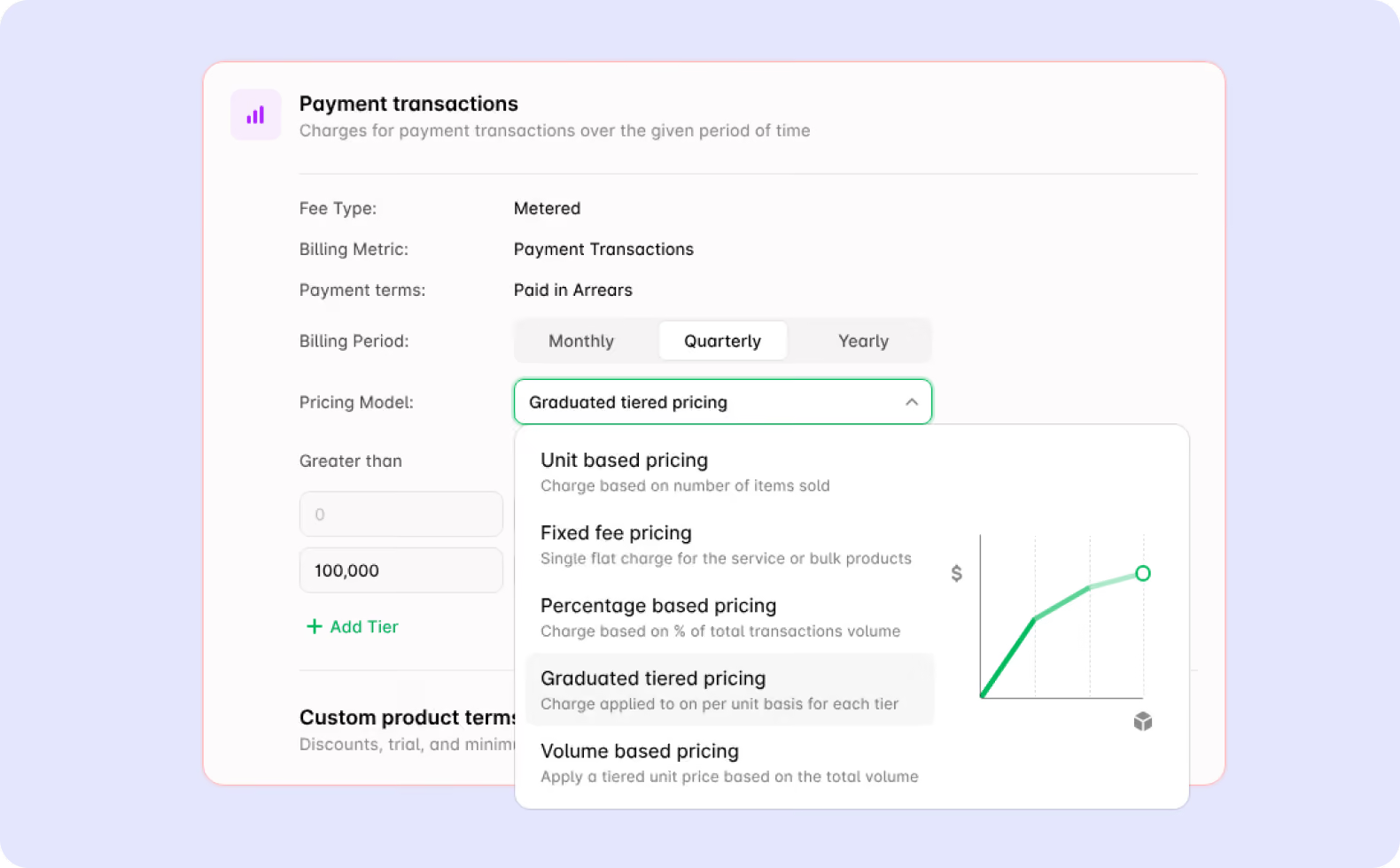
Alguna positions itself as a modern pricing layer that helps teams quote and package complex deals. It is particularly useful for those operating usage-based, hybrid, and bundled pricing. Alguna offers CRM and billing integrations to reduce quote-to-invoice mismatches and billing exceptions.
Key features:
- Supports complex pricing models via a native pricing engine.
- Bundling across subscriptions, usage, and services inside a single quote workflow.
- Native integrations into Salesforce and HubSpot to keep quoting in sync with go-to-market workflows.
Best for: B2B SaaS with complex pricing packaging requiring better quoting-to-billing alignment.
Pricing: By inquiry.
6. Maxio
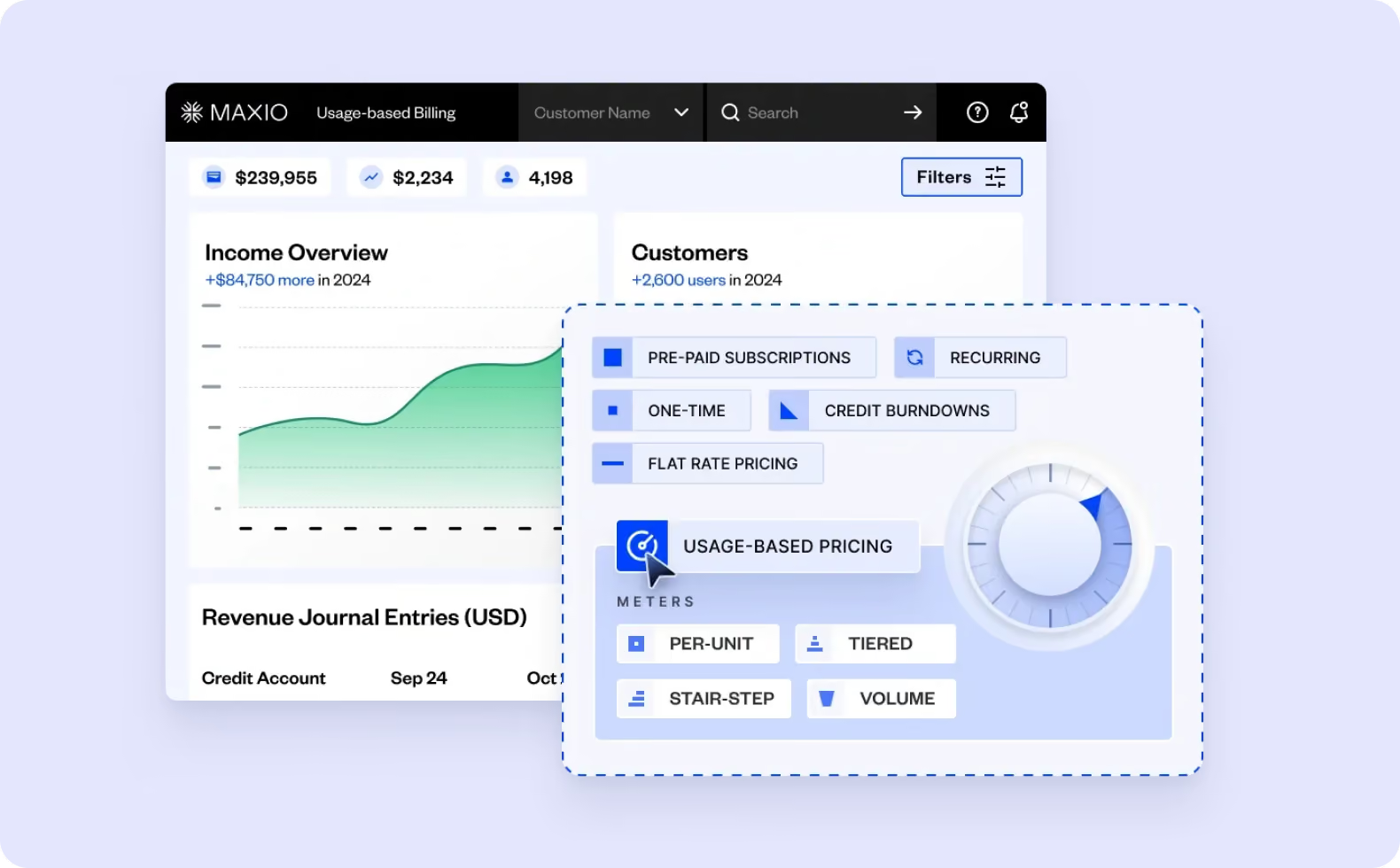
Maxio is a B2B subscription management platform that bundles billing, subscription management, usage-based billing, collections, and reporting. It is aimed at reducing billing leakage and finance overhead as recurring revenue operations scale.
Key features:
- Recurring billing and subscription management included in the plans.
- Collections and dunning, plus integrations with multiple payment gateways.
- Revenue recognition and financial reporting capabilities.
Best for: B2B SaaS finance teams that want an all-in-one subscription billing and reporting platform.
Pricing: The Grow package is $599/month (up to $100K in monthly billings). The Scale package is by inquiry.
Category 3: Cart abandonment recovery
Cart abandonment recovery tools help merchants win back revenue when shoppers drop off before completing checkout. They typically trigger automated sequences, such as email or SMS, based on cart or checkout events. Cart recovery is one part of broader e-commerce conversion optimization strategies. The goal is to re-engage high-intent shoppers back to finish the purchase.
Common benefits and key features in this category
- Recover revenue from high-intent traffic: Triggered sequences bring shoppers back to complete a purchase, improving conversion rate and CAC efficiency.
- Multi-channel orchestration with timing control: Flows like email and SMS with configurable delays help maximize reach without spamming.
- Segmentation and personalization that lifts conversion: Dynamic content, such as cart items and discounts, and behavioral signals help you speak to specific customers.
- Offer and incentive governance: Rules to control when discounts are used (or withheld), so “recovery” doesn’t quietly erode margin.
- Testing and attribution: Run A/B testing on timing, plus reporting that ties recovery flows to incremental revenue.
7. Omnisend

Omnisend is a marketing automation platform that’s commonly used for cart and checkout recovery flows across email, SMS, and push notifications. It includes pre-built abandoned cart and checkout automations that detect when shoppers leave items behind and send recovery messages without manual work.
Key features:
- Abandoned cart and abandoned checkout automation presets (email and SMS).
- Multi-channel messaging designed for e-commerce workflows.
- Segmentation and automation tooling available even on the Free plan (with volume limits).
Best for: E-commerce merchants who want out-of-the-box cart and checkout recovery across email and SMS.
Pricing: The Standard plan starts at $16/month, rising to $59/month for the Pro plan.
8. ActiveCampaign
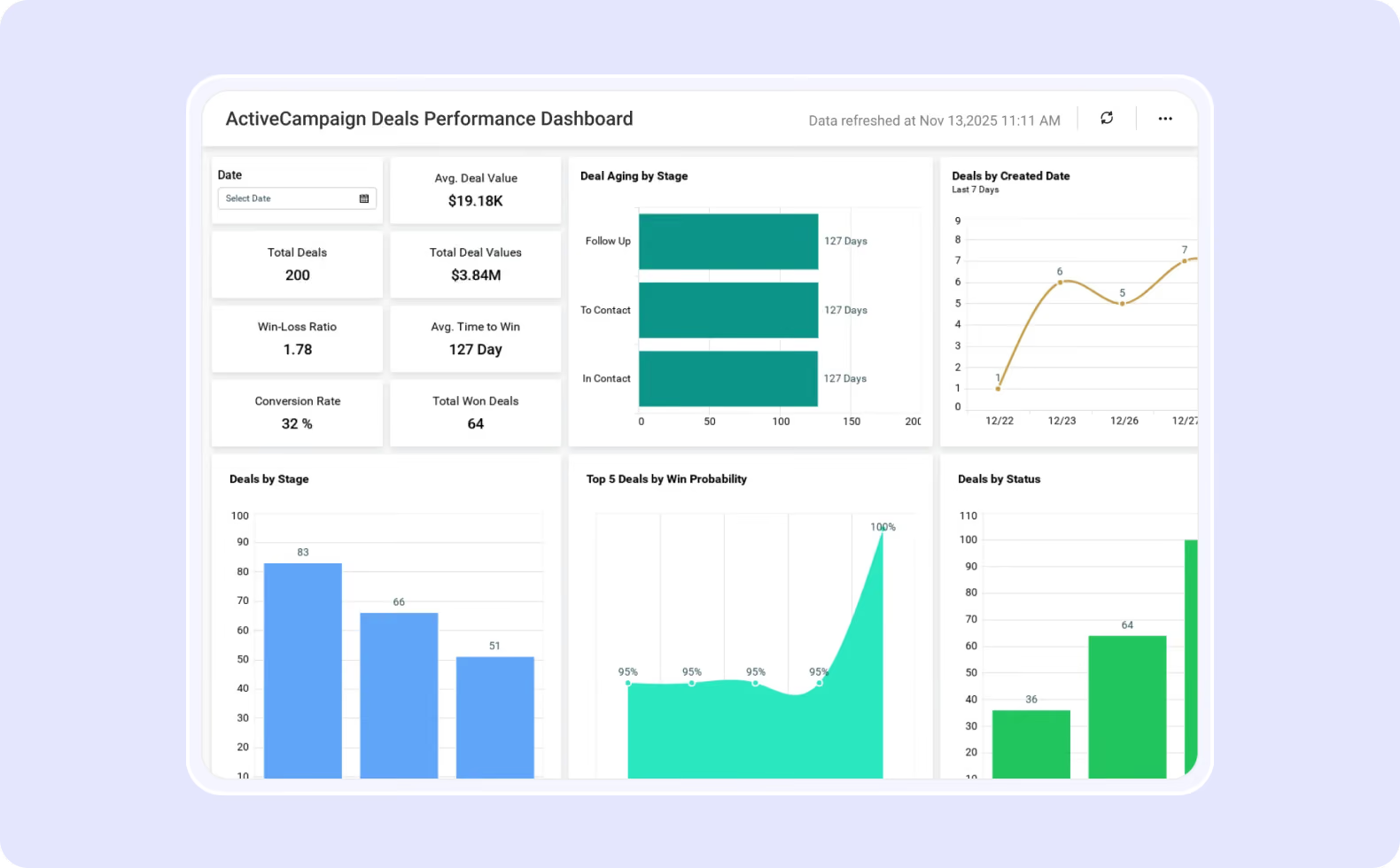
ActiveCampaign is a broader customer experience and marketing automation platform that merchants use for e-commerce lifecycle messaging. It includes abandoned cart automations triggered when a shopper abandons a cart on supported integrations, such as WooCommerce.
Key features:
- Abandoned cart automations using an “abandons cart” trigger (integration-dependent).
- Advanced automation builder for multi-step re-engagement sequences.
- CRM and segmentation capabilities to personalize recovery by customer cohort and behavior.
Best for: Merchants that want advanced automation and CRM-driven segmentation for lifecycle messaging.
Pricing: Varies by plan and contact volume.
9. CartStack
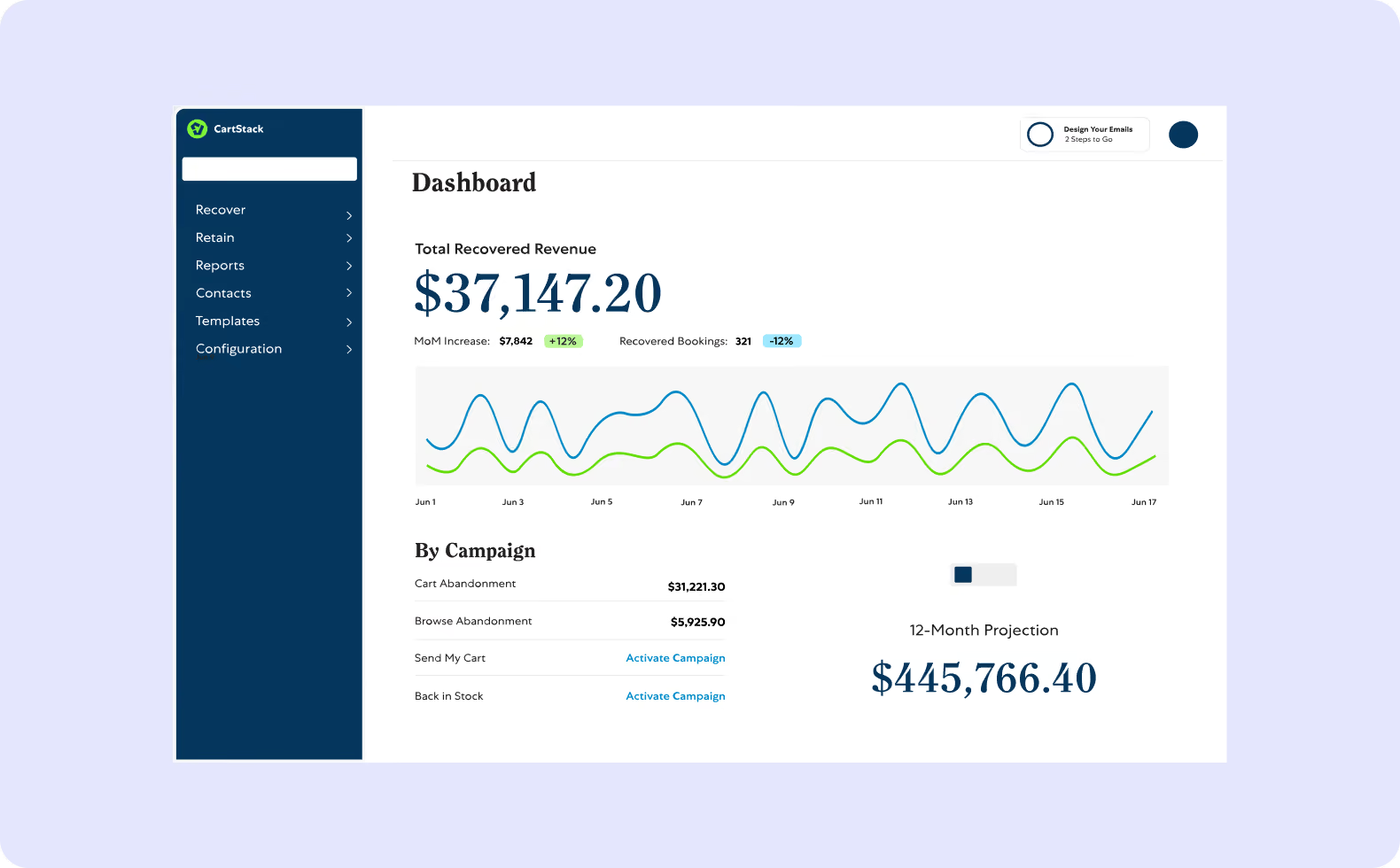
CartStack is a dedicated cart abandonment and visitor recovery product focused specifically on winning back lost checkouts. It combines cart recovery emails with optional SMS, push notifications, and onsite conversion tools, and prices plans based on order volume.
Key features:
- Abandoned cart recovery email campaigns (core offering).
- Multi-channel recovery in higher tiers, plus extras like exit intent offers and conversion toolkit.
- Straightforward implementation via a simple tracking-code embed.
Best for: Merchants that want a dedicated cart abandonment tool focused on recovery flows.
Pricing: The Basic plan is $29/month, Pro is $49/month, and Agency rises to $149/month.
Category 4: Churn reduction and retention tools
Churn reduction and retention tools help merchants keep more customers after the first purchase by improving lifecycle engagement and reactivation. They typically focus on identifying at-risk customers and triggering targeted campaigns that drive repeat purchases and reduce drop-off.
Common benefits and key features in this category
- Improves repeat purchase and customer lifetime value (LTV) through better segmentation and personalization.
- Identifies at-risk cohorts using engagement and purchase signals.
- Automates retention motions across channels with measurable lift and attribution. Some retention stacks use generative AI to generate campaign variants and personalise messaging at scale.
10. Attributely
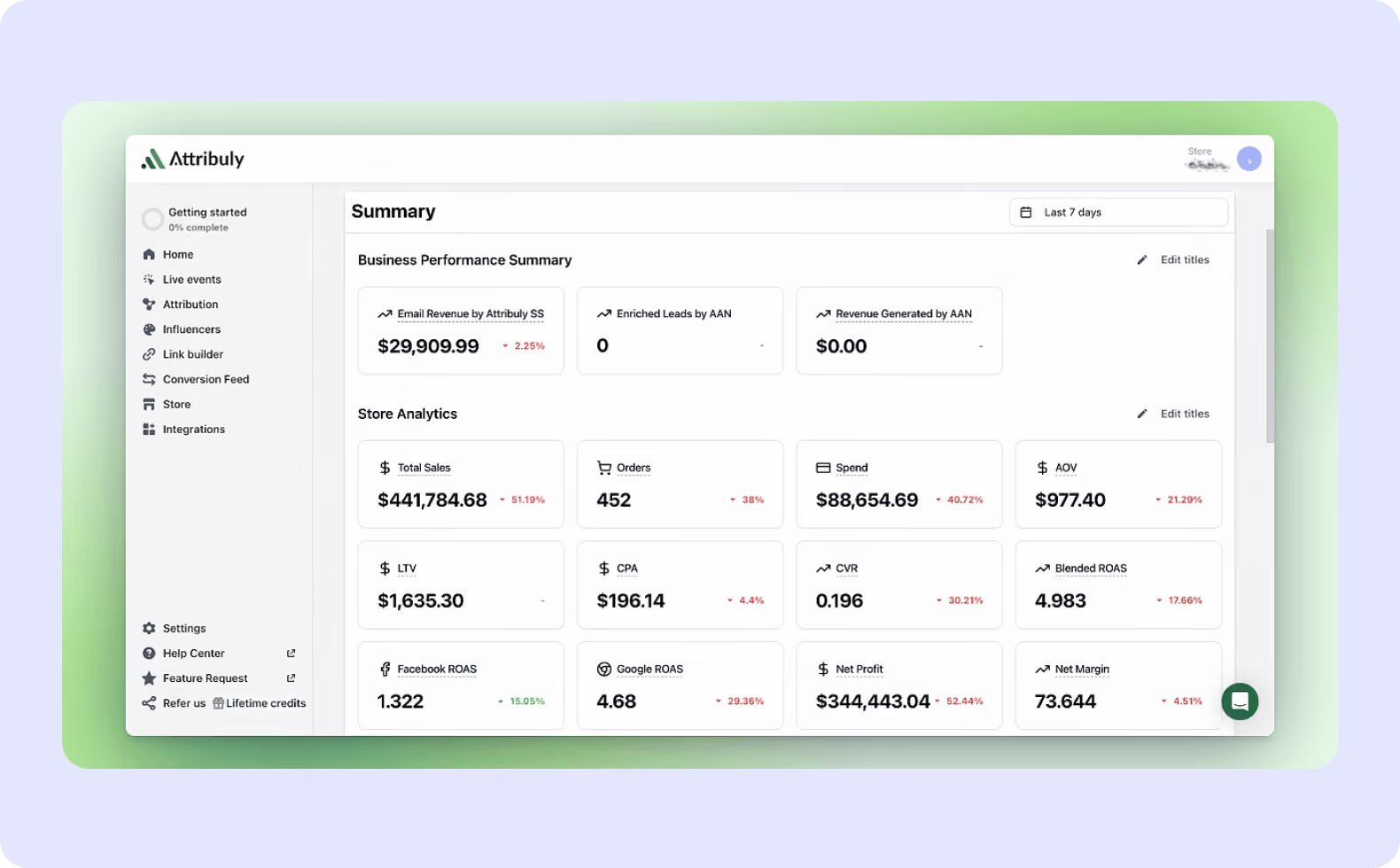
Attribuly is an audience and retention platform geared toward turning more anonymous traffic into reachable profiles. It activates those audiences through existing marketing tools and measures how much revenue those lifecycle campaigns actually drive.
Key features:
- Identity resolution and customer event collection to build richer audiences from onsite behavior.
- Destination sync to marketing channel for activation and retargeting.
- Attribution and performance dashboards to quantify the impact of campaigns on revenue.
Best for: E-commerce teams focused on audience building and retention measurement.
Pricing: The Pro package starts at $8/month. Enterprise is listed at $1,000/month, and anything else is by inquiry.
Turn payment declines into settled revenue
Revenue loss shows up across the customer journey, from abandoned carts that never convert to payment failures that disrupt cash collection. The right revenue recovery software for you should solve the leak that most others don’t: false declines.
False declines happen when legitimate customers get rejected at checkout. You can’t get out of an issuer decline through a clever email marketing campaign, and traditional billing or retention tools don’t change the approval decision.
In contrast, Paymend recovers revenue from declined card transactions by retrying on Paymend’s own banking infrastructure. It complements your billing, subscription, and retention tooling rather than replacing it, giving you a way to unlock revenue at the payment stage without changing acquisition strategy or adding checkout friction.
See what you can recover at checkout by scheduling a Paymend demo.
Paymend is committed to helping businesses make informed decisions about payments and revenue recovery. We strive to provide accurate, practical, and transparent content that meets the high standards we apply across our business.





.svg)